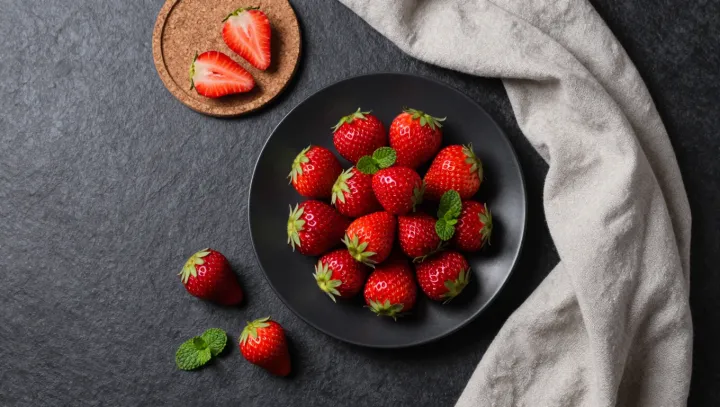
Uneven color, tiny seeds and a slightly bent shape often signal a strawberry that has invested more in flavor than in looks. When a berry grows more slowly, sugars and organic acids have time to accumulate, and volatile aroma compounds concentrate in the flesh instead of being diluted into oversized cells.
Commercial breeding programs, guided by yield and shelf life, frequently favor traits such as firm texture, uniform redness and transport resistance over soluble solids content and aromatic diversity. That bright, billboard red is often the result of selecting for anthocyanin expression in the skin while largely ignoring the metabolic pathways that build sucrose, fructose and key esters responsible for the classic strawberry smell.
Imperfect berries are more likely to come from plants that faced mild environmental stress, like irregular temperatures or lower nitrogen input. Those stressors shift plant physiology, altering photosynthesis and secondary metabolite production in ways that boost flavor intensity but do nothing for cosmetic symmetry. Smaller, oddly shaped fruit also presents more surface area relative to volume, so you perceive more aroma as you bite, even when absolute sugar levels are similar.
Safety tracks the same logic. Large, uniform berries are often bred and managed for long supply chains, which can involve higher agrochemical inputs and extended cold storage. In contrast, short-chain, minimally stored strawberries are frequently picked closer to full physiological ripeness, when cell walls are softer, water content is slightly lower, and the flavor profile is at its peak, even if the skin looks patchy and the shape leans off-center.