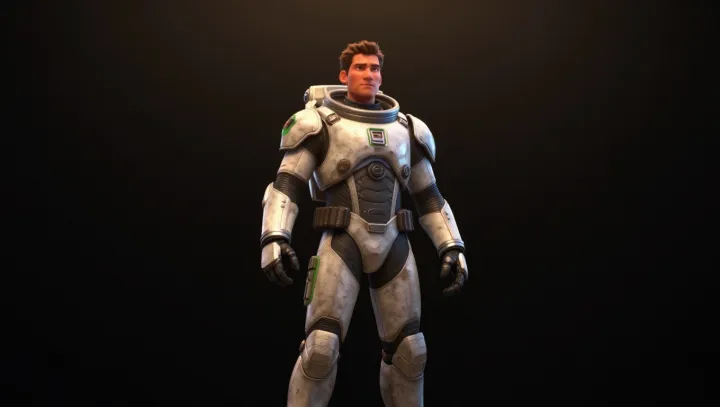
Buzz Lightyear’s glide across the screen looks like fantasy, yet its bones come from real spaceflight math. For Pixar, the point was not to turn a toy into a pilot, but to anchor every exaggerated move in recognisable physics, from inertia to orbital mechanics.
NASA engineers advised on how bodies tumble in microgravity, how a center of mass shifts when a figure extends an arm, and how thrust vectors would actually curve a trajectory. Instead of ignoring Newton’s second law or conservation of angular momentum, animators bent those rules only after understanding them, preserving a coherent internal entropy budget rather than a visual free‑for‑all.
That collaboration let Pixar stylise motion while keeping velocity changes, spin, and free‑fall arcs within a plausible envelope. Buzz still “falls with style,” but his arcs echo real ballistic flight and orbital decay, so the audience accepts the illusion. Real dynamics remain under the surface, like a hidden operating system quietly running the spectacle.