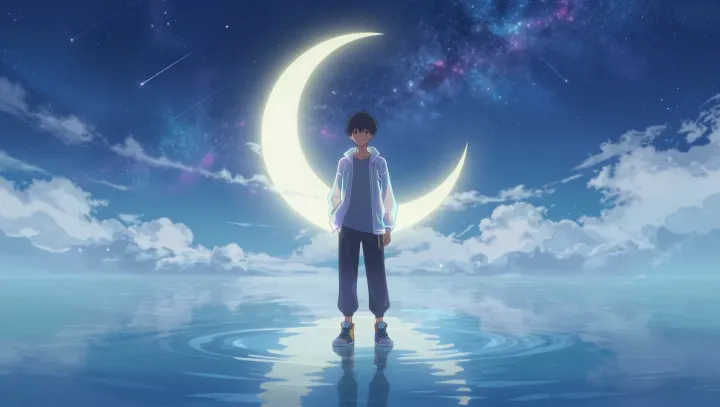
A hand‑drawn tear on screen can feel more honest than a close‑up of an actor’s face. For many young viewers, anime now registers as emotionally “truer” than live‑action, precisely because every frame advertises itself as artificial and exaggerated.
Media psychologists point out that stylization acts like a filter, reducing cognitive noise and sharpening affect. When anatomy, lighting and physics are clearly not obeying real‑world biomechanics or optics, the brain stops checking for realism and reallocates attention to symbolic cues: pacing, color palettes, musical motifs. The result is a kind of emotional signal‑to‑noise optimization, where one gesture or line of dialogue can carry the concentrated weight of a whole conversation from everyday life.
For younger audiences raised on feeds, clips and edits, this compression has a strong marginal effect on engagement. Anime routinely visualizes inner states—panic spirals, intrusive thoughts, social anxiety—as literal storms, glitches or expanding voids, mapping psychological experience onto concrete images. Live‑action, bound by actual bodies and sets, struggles to externalize that interior data without seeming melodramatic. In drawn worlds, the jump from social mask to raw feeling is only a few brushstrokes away, and that gap is where many viewers say reality finally shows up.