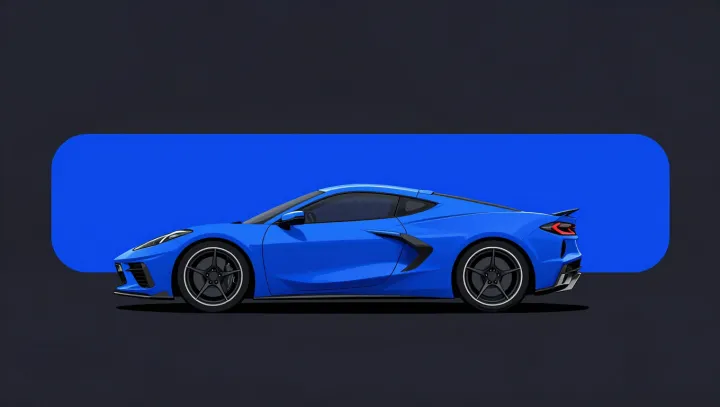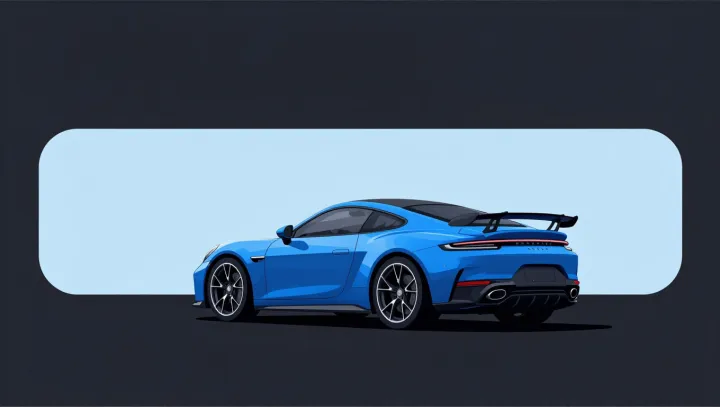
A sheet of paper still sits between the first idea for a car and the machine that renders every bolt in photorealistic 3D. Before polygons and ray tracing step in, graphite lines map out what the object might be allowed to become.
Design studios treat sketching as a high-bandwidth interface between brain and page. Neuromotor control, visual cortex feedback and working memory run in a tight loop, letting a designer test proportions, stance and packaging in seconds. Where a parametric surface model enforces constraints and topology rules, the sketch lives closer to pure entropy increase, capturing dozens of divergent concepts before any one of them hardens into CAD geometry.
The sketch also encodes brand identity and aerodynamics at a glance: a shoulder line hints at drag coefficient, a wheel arch suggests weight distribution. Quick overdraw, erasure and annotation let teams negotiate trade-offs in real time, long before finite element analysis or computational fluid dynamics enter the conversation. Once the idea passes through that filter, 3D tools excel at tolerance, assembly and crash structure, but they are optimisers, not originators.
In studios that depend on differentiation as a strategic moat, paper keeps the early phase cheap, fast and emotionally legible. Software renders certainty; the sketch protects ambiguity long enough for the right car to emerge.