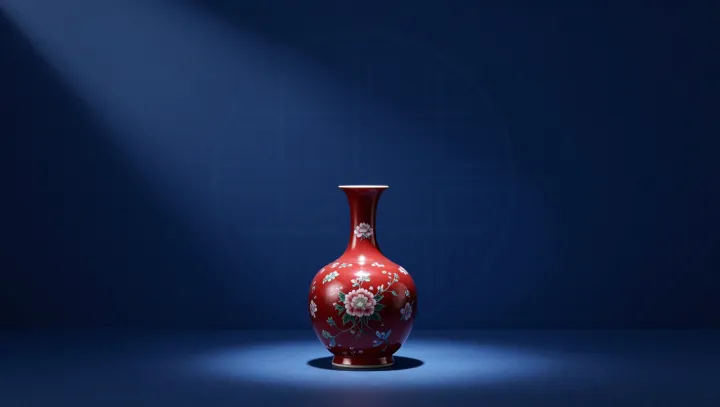
A sheet of pale enamel on a Qing vase still scatters light with uncanny evenness, despite centuries of handling and humidity. That stability did not come from abstract theory, but from a tight loop of workshop experiment, failure and refinement that functioned as an unwritten research program in materials science.
Artisans built their palette on lead‑silicate fluxes fired below the temperature that would deform the porcelain body, reducing thermal stress and microcracking. By tuning the ratio of silica to lead oxide, they engineered viscosity and refractive index, fixing colored particles in a fine glass network. Cobalt, copper and iron colorants, many in the form of crystalline phases, were trapped in this matrix, which slowed diffusion and surface corrosion and effectively lowered the entropy increase that usually dulls glazes over time.
Control of kiln atmosphere worked as process engineering rather than mysticism. Adjusting airflow and fuel created oxidizing or reducing conditions that stabilized specific valence states of metals inside the glaze, preventing later color drift. Repeated firing schedules, recorded as sequences of flame color and sound rather than temperature readings, became a kind of empirical calibration curve. Division of labor inside imperial kilns concentrated this tacit knowledge, turning trial‑and‑error into a system with strong marginal effects: small changes in recipe or firing translated into visible, consistent gains in brilliance and durability.
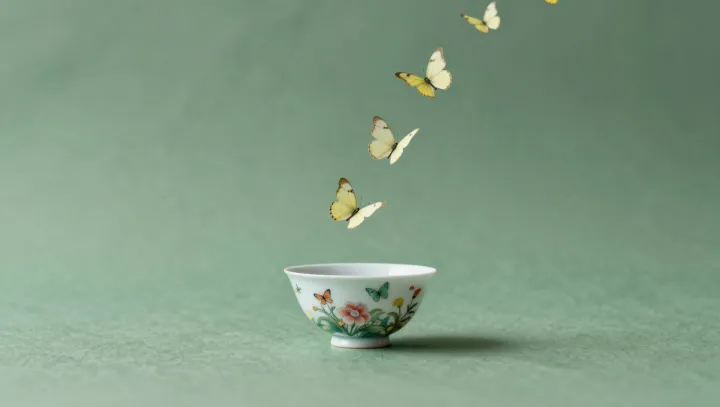
On a shelf in a museum, the quiet surface of one pastel bowl still reflects that intricate chain of decisions, holding in its thin glaze a record of craft logic that predated formal chemistry yet anticipated its precision.