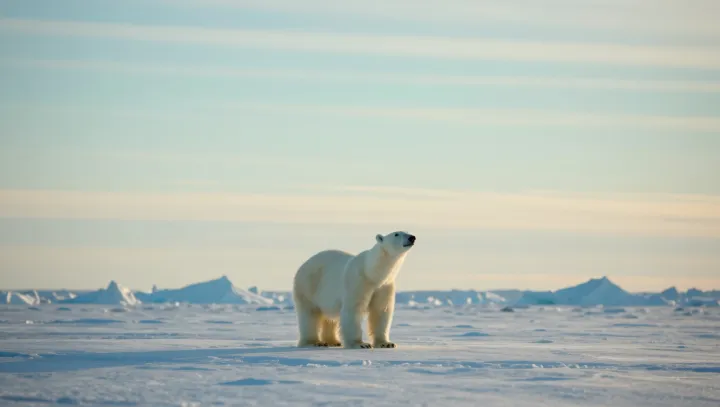
A massive polar bear can stand in front of an infrared camera and barely register as a warm object. The image often shows a bright nose, eyes and breath, while the rest of the body blends into the icy background.
The effect starts with basic thermodynamics and heat transfer. A polar bear has a thick layer of subcutaneous fat that reduces conductive heat loss, lowering the heat flux from the core to the surface. Above that sits a dense coat of fur; each hair shaft is hollow and traps air, which has low thermal conductivity. This multi‑layer system acts like extreme insulation, so relatively little infrared radiation escapes from most of the bear’s surface.
Thermal cameras do not see visible color or size; they detect emitted long‑wave infrared radiation, which depends on surface temperature and emissivity. Because the fur remains close to ambient temperature, the camera reads much of the bear as only slightly warmer than snow or ice. Only thinner, less insulated regions, such as the muzzle and eye area, show a clear thermal signal, along with exhaled moist air, which cools rapidly as it mixes with the environment.
This configuration also supports an efficient basal metabolic rate by minimizing unnecessary heat loss. The bear’s body can maintain internal temperature without constantly dumping excess energy into the surroundings, which is crucial in habitats where food is scarce and every unit of stored chemical energy matters.