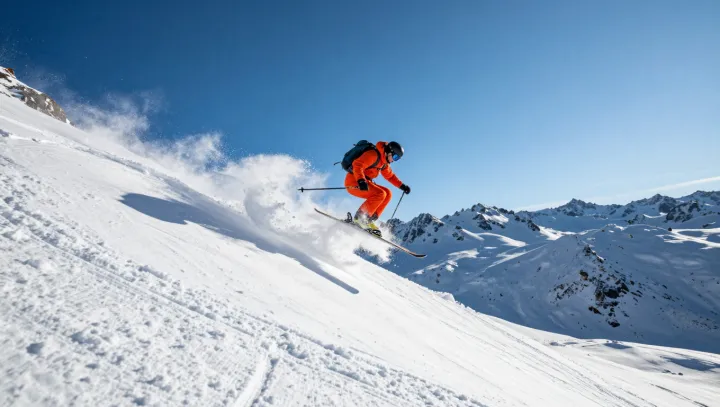
A skier flying off a towering ramp is not falling in the usual sense; the motion is a controlled glide. Once the skis leave the takeoff table, the athlete rearranges limbs and torso into a shallow V that behaves like an airfoil, generating aerodynamic lift and drag. That lift partially cancels gravitational acceleration, while drag trims speed to a level that matches the geometry of the landing hill below.
Behind the spectacle sits precise flight mechanics and terrain design. The body angle, ski spread and center of mass are tuned to shape airflow and increase the lift‑to‑drag ratio, a process modeled with fluid dynamics and confirmed in wind tunnels. At the same time, course designers calculate the parabolic trajectory and sculpt the landing slope so that the jumper’s path runs almost tangential to the snow surface. Instead of a sharp, vertical deceleration, ground reaction forces are spread over distance and time, reducing peak impact on joints and spine.
Ice preparation, inrun speed control and suit regulations further constrain the system, keeping velocities and lift within a narrow safety envelope. The result is a high‑risk sport that relies less on athletes absorbing brutal landings and more on aligning aerodynamics and terrain so that, at touchdown, very little energy needs to be abruptly lost at all.