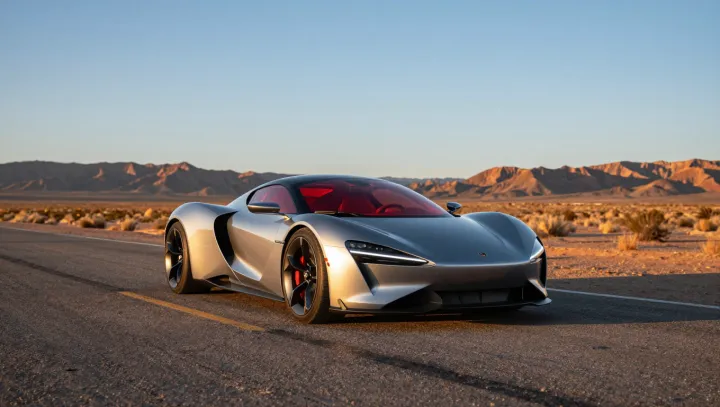
The white lines on the highway start to blur, the engine hum thickens, and the clock on the dashboard does something quietly subversive: it refuses to match what your mind feels. At higher speeds, minutes seem to dissolve faster, even though the same number of heartbeats and neural spikes are marching on inside your body.
Physics is clear that proper time for your body, governed by classical mechanics and far from any relativistic threshold, advances at a steady rate. Yet cognitive neuroscience shows that subjective time depends less on the ticking of a circadian rhythm and more on how attention and working memory segment experience. When you drive fast, the visual system is hit with a dense stream of optic flow, and your brain must perform continuous motion tracking and hazard prediction.
Under that load, the brain starts to compress. It performs a kind of lossy compression on experience, discarding many near-identical snapshots of the road. Fewer distinct events get written into episodic memory, so when you look back, the trip feels short because it contains little narrative structure. At the same time, sustained arousal driven by autonomic nervous system activation narrows attention onto the road and away from internal cues, giving your internal clock fewer reference points.
Experiments on time perception and mental chronometry show a similar pattern in other high-intensity tasks: when information density is high but repetitive, the mind optimizes for survival, not storytelling. High-speed driving becomes a smooth, low-variation data stream, rich in sensory input but poor in memorable change, so the physics of time stays rigid while psychological duration quietly collapses around it.