Airflow, not adrenaline, now defines modern skydiving. The sport treats a falling human as a variable wing, governed by lift, drag and angle of attack. Training focuses on how small changes in limb position reshape the body’s effective airfoil, redirecting forces that once felt like chaos into predictable vectors of motion.
In freefall, the body moves through a fluid medium that obeys the Navier–Stokes equations, and instructors translate that abstract mathematics into simple control inputs: arch to increase stability, de-arch to increase forward speed, extend arms to add drag, sweep them back to track horizontally. Skydivers learn to read relative wind like instrument pilots read gauges, using center of pressure and moment of inertia to roll, yaw and pitch on command.
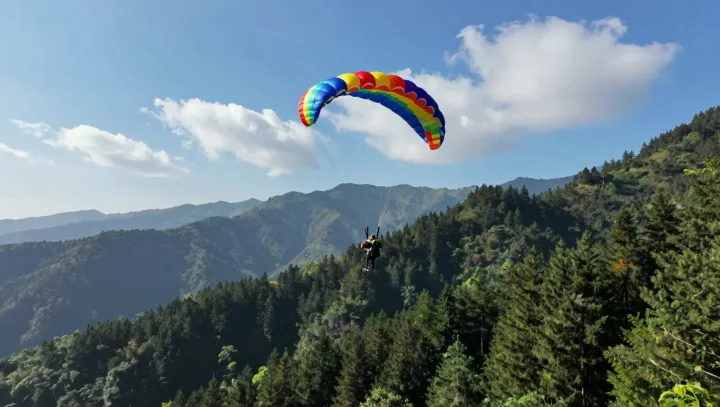
Parachute flight adds another aerodynamic layer. Ram-air canopies behave as flexible wings, producing lift through pressure differentials across their surfaces. Toggles and risers function as control surfaces, changing camber and inducing turns much like ailerons and elevators on a small aircraft. Standardized body positions, airflow awareness and canopy control drills have turned what was once a leap of faith into a tightly modeled interaction between human biomechanics and atmospheric physics.