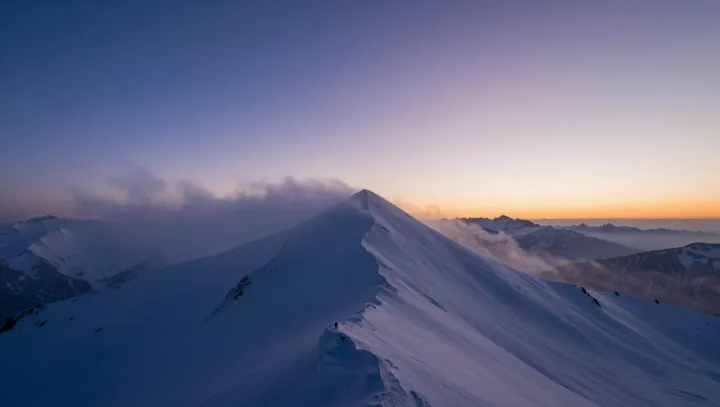
High mountain ranges do more than decorate the horizon; they reroute the atmosphere. As air crashes into these elevated walls, planetary waves in the jet stream buckle, steering storm tracks, moisture, and temperature patterns across entire continents. Climate zones that look like fixed features on a map are, in part, the downstream product of this large scale atmospheric circulation.
Yet the same topography that sculpts global patterns also rewrites the weather over a few meters. Cross a sharp ridgeline and the lapse rate, humidity, and solar exposure can shift abruptly, creating a new microclimate on the far side. One slope may host alpine tundra, the other dense forest, divided only by a narrow saddle of rock. Orographic lift wrings water from air on the windward face, while a rain shadow builds dry, clear conditions in the lee.
Ecologists and atmospheric physicists treat these boundaries as natural laboratories, where gradients in energy balance and evapotranspiration can be measured almost step by step. For travelers, the transition feels like passing through an invisible door: the same mountain range that bends a jet stream can, within a single stride, deliver a different sky.