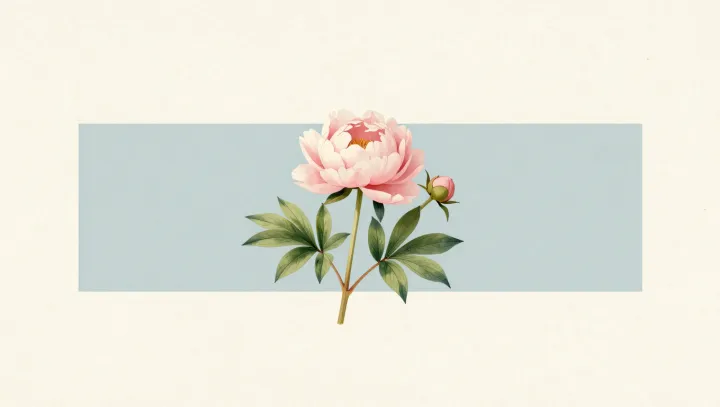
A bloom once read as a metaphor for brief beauty now anchors some of the longest-lived plantings in ornamental gardens. The peony, celebrated in classical East Asian art for its fragile moment of perfection, routinely remains in the same soil for multiple human generations, sending up flowers year after year from a single clump.
Botanists point first to the plant’s underground architecture. Peonies store carbohydrates in thickened root systems and crowns, a form of biological capital that stabilizes their basic metabolic rate and allows reliable bud formation even after harsh winters or neglect. Their meristem tissue stays protected below ground, reducing mechanical damage and slowing processes of cellular senescence that limit many other ornamentals.
Garden practice then compounds that natural resilience. Because peonies dislike frequent disturbance, the standard advice is to plant once, avoid excessive division, and maintain moderate soil fertility rather than forcing rapid growth. That low-intervention regime minimizes stress, keeps entropy increase in check at the tissue level, and lets the plant build dense root reserves. In effect, a flower originally used to illustrate how quickly beauty fades has become a case study in how stable environments and conservative energy budgets can turn a brief spectacle into a near-permanent fixture of the landscape.