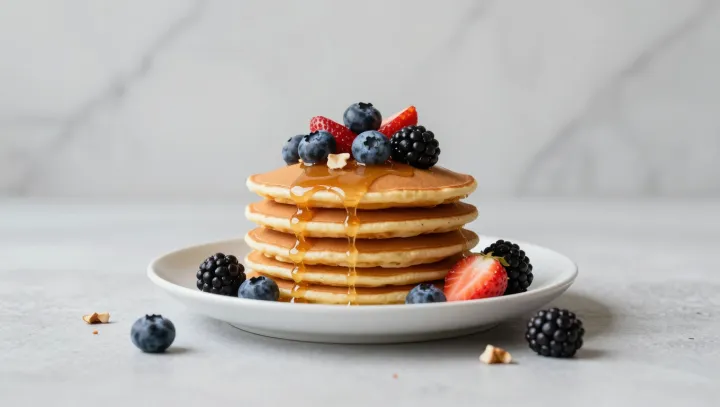
A thin sheet of grain batter spreading over a hot stone marks the distant ancestor of the modern pancake. That early mix, made from crushed grains and water, dried into dense cakes that functioned more as edible plates than as breakfast treats. Over time, grinding technology, controlled heat, and access to milk, eggs, and later chemical leavening quietly rewired that primitive formula into the soft, stackable pancakes now drenched in honey.
The turning point lies in both ingredients and chemistry. Wheat flour brings gluten, a network of hydrated proteins that traps gases like a flexible mesh. When baking powder or fermented starters release carbon dioxide, that gas inflates the gluten scaffold, much like air expanding a balloon, a process governed by gas diffusion and protein denaturation. Eggs stabilize the structure, fats limit toughness, and the batter’s viscosity sets how high the bubbles can rise before they burst.
On the hot pan, heat transfer drives two key reactions. First, dissolved gases expand, then water turns to steam, pushing against the batter and increasing its apparent volume, a culinary echo of entropy increase as molecules gain freedom of movement. At the surface, reducing sugars and amino acids trigger the Maillard reaction, building the golden crust and toasty aromas that signal doneness. Honey, added on top rather than inside, contributes hygroscopic sugars that hold moisture and a complex mix of volatile compounds, turning a once austere grain sheet into a fragrant, aerated stack.