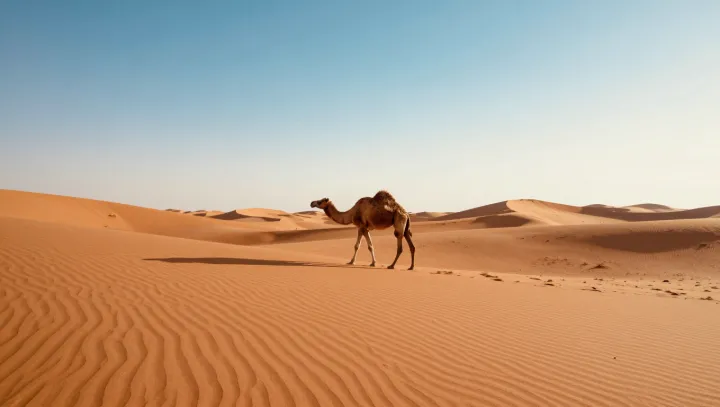
A camel’s hump is not a water tank. Desert travel depends instead on a quiet redesign of blood, fat and heat. The animal runs a tight liquidity budget, stretching each drop across long distances and brutal sunshine.
Inside the bloodstream, camel red cells act like elastic containers, tolerating extreme shifts in blood plasma volume without rupturing. This stabilizes circulation while total body water falls, supporting core homeostasis when other mammals would collapse. High plasma protein levels help retain fluid within vessels, limiting how much water seeps into surrounding tissues and is lost.
The hump’s fat operates as an energy reserve that spares muscle protein from breakdown. Burning lipid yields metabolic water through oxidative phosphorylation, but the crucial gain is that the camel can fuel movement without opening extra routes of nitrogen waste that would demand more urine. Meanwhile, a low baseline basal metabolic rate trims heat production, reducing the need for evaporative cooling.
Thermoregulation provides the final lever. Camels allow body temperature to swing across several degrees, storing heat by day and dumping it when air cools. By delaying sweating and panting, they cut respiratory and cutaneous water loss. Nasal passages reclaim moisture from exhaled air, further tightening the loop. In the desert, survival comes from this integrated water management system rather than any mythical internal reservoir.