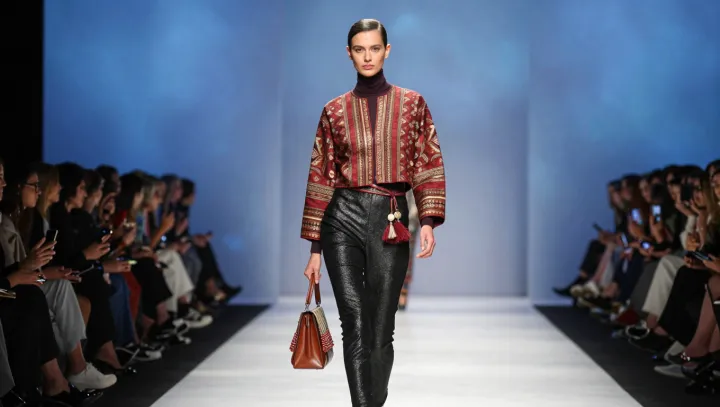
Runway outfits are starting to look less like clothes and more like open-ended experiments. Each exaggerated silhouette, unstable heel and moving accessory acts as a test rig to see where fabric, balance and human movement fail under real conditions.
Behind the theatrics sits a quiet layer of biomechanics and structural engineering. Designers push center of mass, torque and load distribution the way a lab would stress-test a bridge, mapping the exact moment when gait breaks, joints compensate or a seam begins to shear. Materials with high tensile strength are cut into shapes that deliberately destabilize posture, forcing the body to negotiate new equilibrium in real time.
The catwalk becomes a controlled trial with living data. A few unstable steps reveal more about joint kinematics and friction than static fittings ever could, while exaggerated headpieces and trailing structures expose the limits of cervical spine tolerance and ground reaction forces. When a model must shorten stride, twist the torso or grab a rail, the collection has located a boundary where physics reasserts control. Designers then fold those findings back into more wearable lines, turning spectacle into a feedback loop for what everyday fashion can realistically ask the body to do.