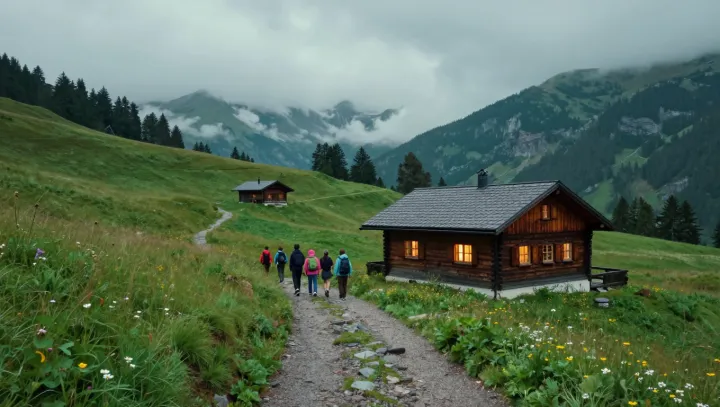
Lower stress hormones and steadier attention often show up not in quiet offices but on steep mountain paths. Harsh terrain, thin air and long walks do not translate into chronic overload of the stress system; instead, they appear to recalibrate it. Continuous moderate exertion keeps baseline arousal stable, while short spikes of effort are followed by real physiological recovery, rather than the fragmented rest common in cities.
The sympathetic nervous system and the hypothalamic pituitary adrenal axis respond differently when effort is physical, predictable and socially meaningful. Carrying wood or tending animals demands energy, yet it rarely produces the constant low grade uncertainty that drives rumination. The prefrontal cortex, responsible for executive control and selective attention, is not bombarded by notifications, traffic noise or multitasking demands, so its limited metabolic budget is spent on a narrower set of tasks.
Environmental cues also matter. Wide horizons, natural light and low artificial noise reduce sensory conflict, allowing attentional networks to cycle between focus and gentle mind wandering, a pattern linked with healthier autonomic balance. Higher basic metabolic rate from regular movement supports stable glucose supply to cortical circuits. Life is physically harder, but cognitive load is cleaner, and the brain appears to prefer that trade off.