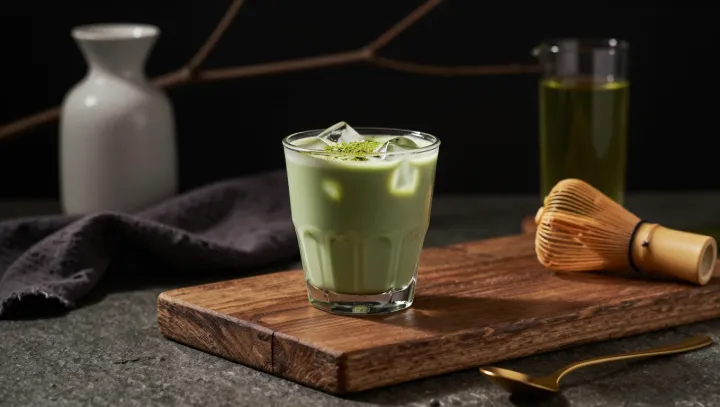
Matcha turns the familiar tea leaf into something closer to an edible architecture than a simple drink. Instead of steeping and discarding the plant, the leaf is shaded, picked young, then ground into a fine powder that you ingest whole, shifting the basic metabolism of your daily tea ritual.
The shade phase forces the plant to boost chlorophyll and preserve the amino acid L-theanine, while maintaining catechin-rich polyphenols. Rather than extracting a fraction of these compounds into water, matcha delivers the entire particulate matrix of the leaf. That difference in delivery mechanism changes dosage, bioavailability and, by extension, the marginal effects on focus, calm and cardiovascular markers that consumers tend to attribute vaguely to “green tea.”
Stone grinding keeps temperature and oxidation in check, protecting fragile antioxidants and volatile aromatics that might degrade in faster industrial milling, a reminder that entropy management is as relevant in a tea mill as in an engine. For a market already saturated with functional beverages, this is not a new flavor but a redefinition of what it means to consume tea itself.