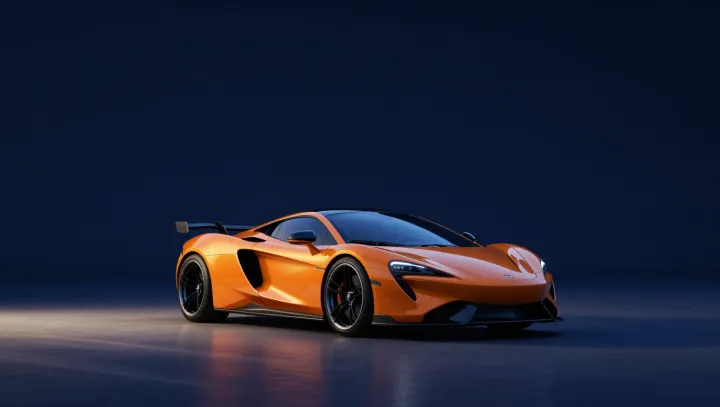
A scarcely known badge from the U.S. briefly sat above Bugatti on the road‑legal top‑speed table. The SSC Tuatara, built by a company with a tiny headcount and a constrained budget, pushed past the French icon’s benchmark and forced the industry to ask how an outsider pulled it off.
The answer starts with power‑to‑weight ratio and drag coefficient rather than with brand heritage. SSC used a mid‑mounted twin‑turbo V8 tuned for extreme specific output, then wrapped it in a carbon‑fiber monocoque and body designed for minimal frontal area and low Cd. Instead of chasing luxury mass and elaborate sound insulation, engineers treated every kilogram as a form of entropy to be cut from the system.
That focus extended to systems engineering. Cooling channels, intake paths and underbody aero were modeled to keep laminar flow stable at speeds where small vortices can erase any margin. The gearbox, final‑drive ratio and tire construction were optimized as a single drivetrain ecosystem, turning mechanical grip and thermal management into a controlled variable rather than a constraint.
On the business side, SSC ran a different marginal‑effects equation from Bugatti. It leveraged specialist suppliers for engines, carbon structures and electronics, keeping the core team small and the decision loop short. Instead of building a wide luxury moat, the company concentrated resources on one metric: verified maximum velocity on a public road. For a brief moment, that narrow objective was enough to move the hypercar hierarchy.