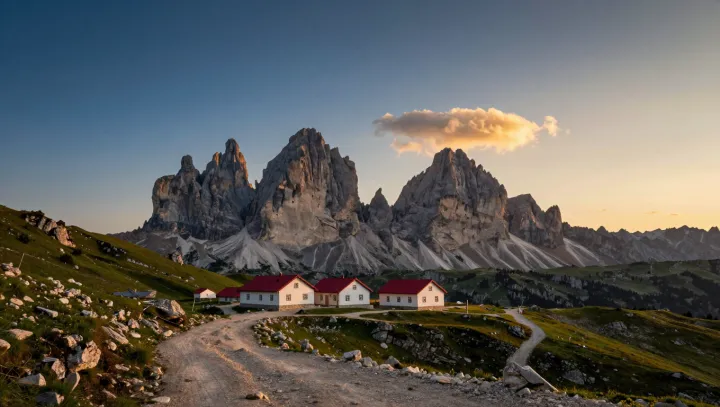
A lattice of Italian rifugio huts now lets non-climbers sleep inside terrain once reserved for expert alpinists. The same buildings started as bare shelters, designed only to keep wind and snow off mountaineers moving between peaks.
Early structures were stone boxes with bunks and a door that closed against exposure, positioned along classic ridgelines and glacier approaches. As recreation replaced pure summit conquest, Alpine clubs and local authorities added marked trails, fixed signage, and standardized topographic mapping, turning isolated refuges into nodes in a predictable network.
Regulated staffing then changed the risk profile. Guardians introduced route information, avalanche awareness based on snowpack stability, and basic first-aid capability. Shared dormitories, reservation systems, and radio or mobile links provided redundancy that reduced individual baseline risk, in effect lowering the psychological and logistical entry cost for visitors without technical skills.
The huts also integrated with public transport and valley tourism, creating continuous access chains from rail stations to high passes. Waymarked approaches, graded by difficulty, allow hikers to move through zones of crevasses, rockfall, and rapid weather change while relying on predictable shelter spacing. In that shift from emergency box to serviced waypoint, extreme altitude became a managed environment instead of a private arena for specialists.