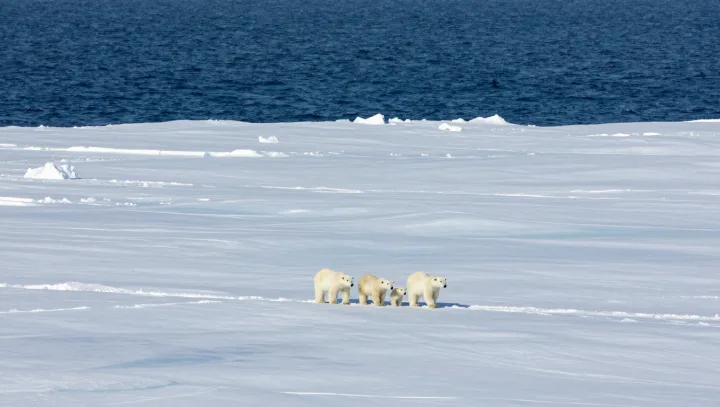
A body built to conserve heat can become a liability long before cold becomes a threat. The polar bear’s legendary insulation turns the animal into a near-perfect thermos, trapping metabolic heat so effectively that the real danger in bright Arctic weather is not freezing, but overheating.
Dense, water-repellent fur overlays a thick layer of blubber, sharply reducing thermal conductivity and convective heat loss. This design cuts the energy cost of survival by lowering the baseline heat leak, yet it also means that during a fast walk, a chase, or a prolonged swim, internal heat from a high basal metabolic rate accumulates faster than it can escape. Unlike many mammals, polar bears have relatively small, poorly ventilated areas for dumping excess heat, and panting is limited because it risks losing too much water in a dry, icy environment.
To avoid lethal hyperthermia, the animal leans on behavior rather than hardware: it rests frequently, moves slowly across ice, avoids running unless necessary, and often chooses colder surfaces like snow or seawater to increase heat flux away from the core. In intense sunshine, even standing still on dark rocks or thin ice can push body temperature toward critical limits, while the surrounding air remains far below freezing, a quiet illustration of how extreme cold and extreme heat can coexist inside the same white silhouette.