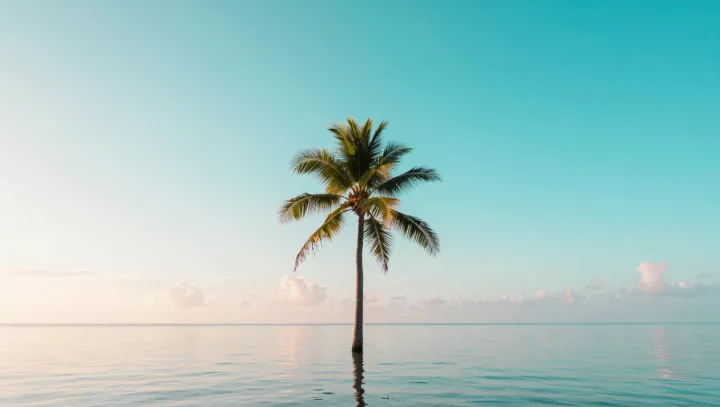
A coconut drifting in open water is not debris but a tested dispersal device. Over countless generations, palms that dropped seeds able to stay afloat, resist impact and still germinate gained a powerful edge in colonizing new coasts.
The coconut seed is built around three key layers. The outer husk, or mesocarp, is packed with air-filled fiber that lowers density and increases buoyancy, a simple application of Archimedes’ principle. Inside sits a lignified shell that behaves like biological armor, protecting the embryo from mechanical stress and microbial attack during long-distance dispersal. Deep within, a fatty endosperm and liquid endosperm stockpile chemical energy, sustaining embryo metabolism after landfall and delaying desiccation once the shell finally cracks.
Natural selection acted on variation in husk thickness, fiber structure and shell toughness, gradually improving this dispersal system’s survival rate. Seeds that floated longer without waterlogging, endured surf impact on coral or sand, and germinated successfully on marginal shorelines left more offspring, shifting allele frequencies over time. The result is a propagule that integrates materials science, fluid dynamics and developmental biology into a single, ocean-ready package.