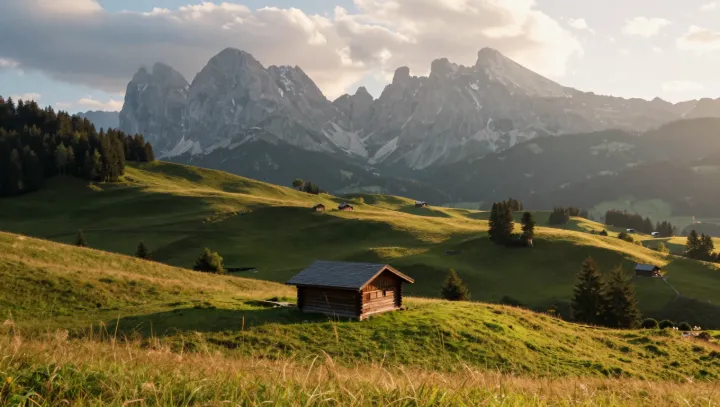
Cloud shadows, not summit postcards, tell the real story of the world’s great mountain chains. The Andes get the headlines as the longest, yet it is the Himalaya–Tibetan Plateau block that acts like a continental-scale dam, forcing moist air to rise, cool and condense, powering the South Asian monsoon that feeds hundreds of millions downstream.
More underestimated still are the Rockies. They look like a scenic spine, but orographic lifting over their high ridges wrings moisture from Pacific air, creating a rain shadow that helps set up the semi-arid interior plains. That same topographic barrier redirects the polar jet stream, nudging storm tracks and temperature contrasts that forecasters watch on upper-air charts with almost obsessive focus.
Least acknowledged in this quiet hierarchy of influence are shorter chains such as the Southern Alps in one oceanic corner and the Zagros along a continental margin. Their steep gradients amplify mechanical weathering and sediment flux, feeding adjacent basins and altering isostatic balance in the crust. Along the Zagros and the neighbouring Caucasus–Anatolia zone, compressional stress, fault locking and elastic strain accumulation translate directly into dense belts of seismicity.
Taken together, these ranges operate less like scenic backdrops and more like hard-edged control knobs on atmospheric circulation and plate tectonics, setting the terms for who gets rain, who faces drought and where the ground is most likely to rupture without warning.