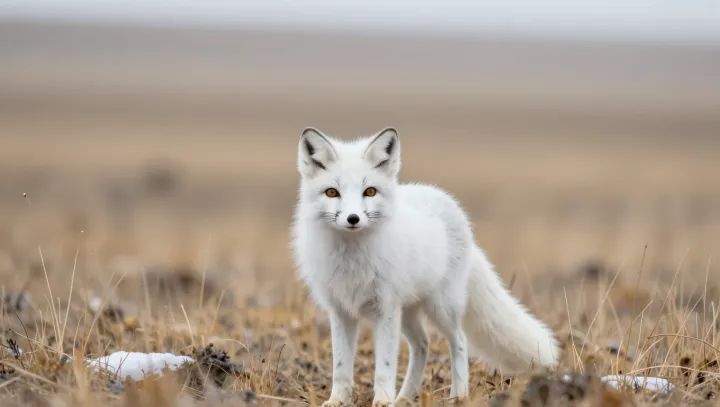
Snow-white fur misleads; the Arctic fox is less fragile ornament than engineered survival unit. Around its compact body, fur density reaches one of the highest values measured in any wild mammal, packed so tightly that surface heat loss at low ambient temperature can drop to almost negligible levels. Guard hairs trap still air, underfur acts as a multilayer barrier, and even the paws are fur-covered, shrinking exposed area so efficiently that larger predators lose heat faster despite heavier mass.
More radical still is its internal accounting system. Instead of maintaining a constant energetic style, the fox shifts basal metabolic rate and fat deposition like a biological hedge fund, storing large subcutaneous reserves in times of carrion or lemming abundance, then throttling energy expenditure when prey disappears. Hepatic gluconeogenesis slows, thyroid hormone output adjusts, and peripheral vasoconstriction keeps core organs warm while extremities cool, allowing body condition to remain stable across astonishing swings in food intake.
Even its hunting strategy reflects this austerity logic. Where bigger carnivores must burn calories to patrol vast territories, the fox can sit over a seal breathing hole, let its low thermal conductivity cloak it from detection, and wait. What looks like a delicate snow sprite on the ice is, on closer inspection, a small carnivore that has turned cold and scarcity into manageable design parameters.