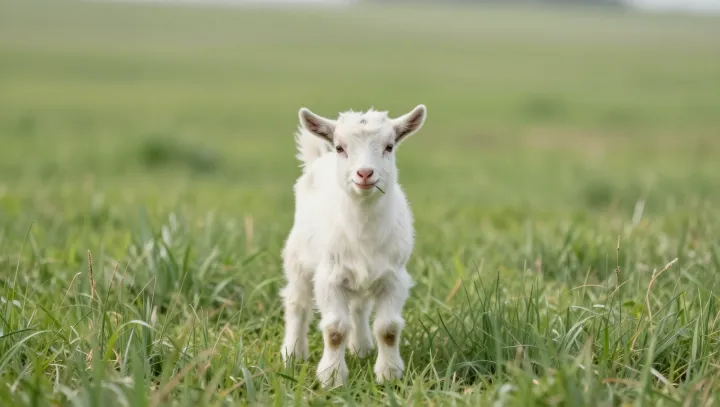
Sound wins. Long before a lamb can confidently pick its mother out of a crowd of identical white bodies, it is already following her voice through a noisy flock. Within hours after birth, behavioral studies show, lambs approach and suckle almost exclusively in response to the specific bleats of their own ewe, rejecting calls from others even when those calls are played at matched volume.
That hierarchy of senses is no accident. Early in life, auditory pathways in the brainstem and auditory cortex reach functional precision while the visual cortex and higher-order face processing networks are still under construction, so the lamb’s safest bet is to bind identity to a stable acoustic code rather than a shifting visual pattern, especially in open fields where bodies overlap and movement, mud, and light constantly distort outlines and markings.
Face recognition does arrive, but late and clumsy. Only after repeated nursing bouts, when synaptic plasticity has refined circuits in the temporal and occipital lobes, do lambs reliably choose their mother based on her head and facial profile alone, a delay that suggests evolution has optimized early survival for rapid, noise-resistant voice imprinting, leaving fine-grained visual identification to catch up once the immediate risks of separation have eased.