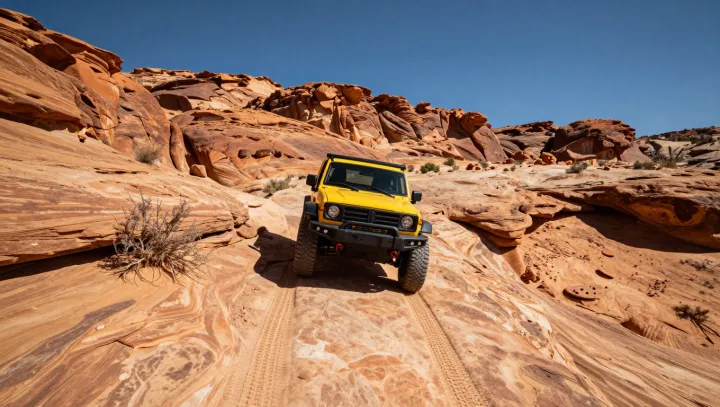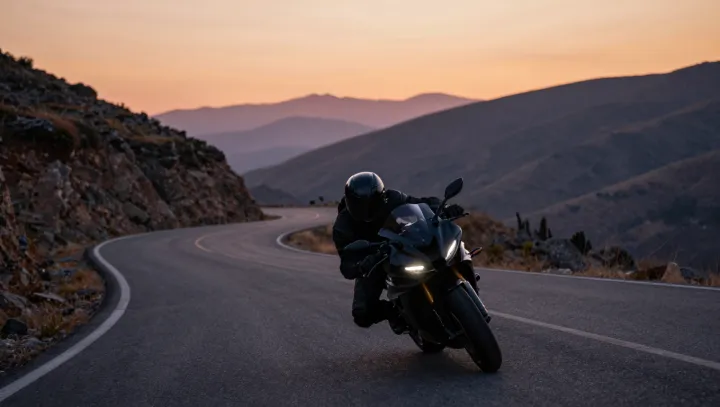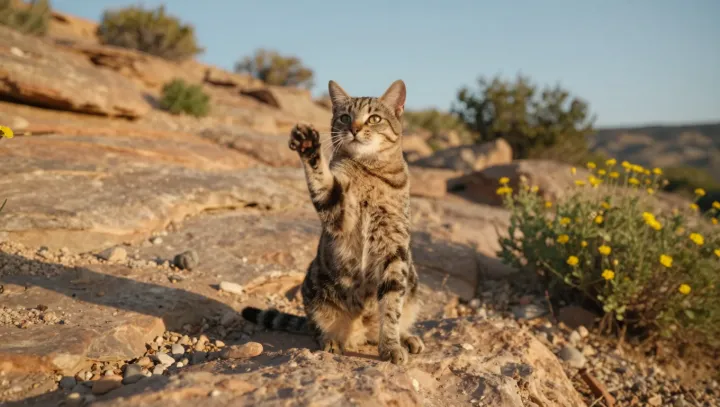
Perfect balance, in a desert cat, is less a gift than an engineered compromise with hostile rock. Heat shimmers above the ground; stone edges tilt unpredictably; yet the animal threads across them with the same shared-risk physics that governs a mountaineer’s rope team, distributing forces so no single point bears the full mistake.
What looks like effortless grace is really load management. The spine does not just bend; it works as a segmented spring, storing elastic energy in each vertebra while muscles tune tension to keep the center of mass over a shifting base of support, much as a climbing rope stretches to smooth sudden pulls along a line of climbers who never quite move in sync.
The paws argue against the myth that fur is the main defense. Thick, deformable pads act as viscoelastic shock absorbers, spreading impact over time and area, trimming peak ground reaction forces that would otherwise snap small bones or scramble balance. Micro-adjustments in toe splay alter friction coefficients on gritty rock, giving the cat a dynamic equivalent of crampons that constantly reconfigure.
Most decisive, though, is the information stream. The tail provides rotational inertia and fine torque control, letting the cat counter-roll its body when one paw slips, echoing how a belayed climber can correct a stumble without falling off the line. Whiskers feed rapid tactile and airflow data into proprioceptive circuits, refining estimates of limb position in real time. Together they form a closed sensorimotor loop that turns hostile terrain into a solvable physics problem.