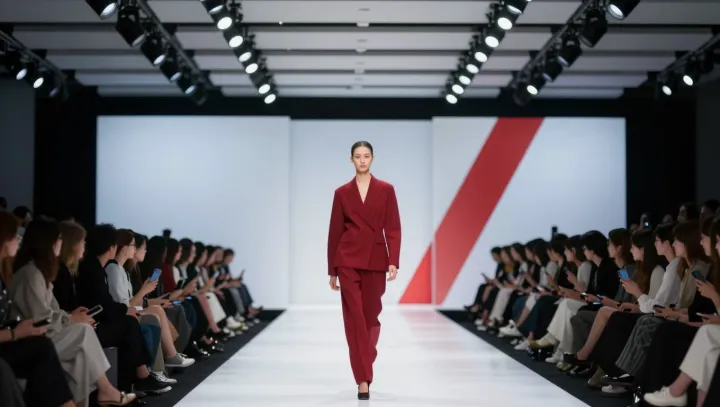
Red fabric hits the eye first. Before cut, before label, before the handshake, a saturated red suit takes control of the frame, and that is exactly the point for a rising class of power dressers drifting away from black.
The shift is not about taste. It is about leverage. Experimental work in color psychology shows observers rate wearers of vivid red as more dominant, more assertive, even when researchers hold constant facial expression, posture and body mass index through controlled photography and randomized presentation. Against that evidence, black starts to look oddly neutral, a safe uniform that blends into the visual background rather than bending it. In boardrooms and broadcast studios where attention is the scarcest currency, neutrality is a hidden cost.
What red really buys is status signalling efficiency. One garment, no extra effort. Social perception studies using forced‑choice ranking tasks find red repeatedly associated with leadership and higher competitive threat, a bias rooted in both opponent‑process theory in vision science and long‑running cultural coding of red with authority, victory and warning. High‑stakes dressers are simply running that bias as a closed-loop strategy: use color to create a zero-sum gain in presence without altering a single physical feature.