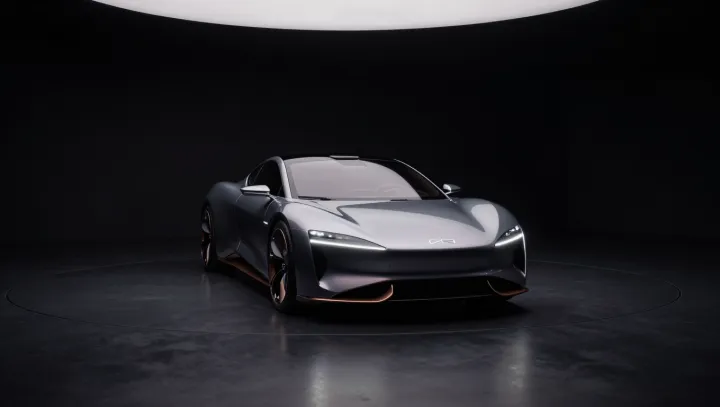
Air is the real suspension at triple-digit speeds, and supercars treat it like a tool, not a hazard. Where a family car’s bluff nose and flat floor behave like a crude wing that builds positive lift, a supercar is shaped as an upside‑down airfoil that deliberately pushes itself into the ground as speed rises.
The core trick is pressure, not power. Sculpted splitters and rear wings act as inverted wings, using Bernoulli’s principle and boundary layer control to drop static pressure above the car while keeping higher pressure trapped below, so the net force is downforce instead of lift. At similar speeds, a tall, smooth-roofed family car often produces significant front and rear axle lift, enough to lighten steering feel and lengthen braking distance in the same airflow that locks a supercar onto the tarmac.
More decisive still is what happens under the floor. Many modern supercars use venturi tunnels and ground effect, accelerating air through narrowed underbody channels to create a low‑pressure zone that sucks the chassis downward without a giant rear wing. Add active aero surfaces that tilt, stall or seal gaps under electronic control, and the car dynamically manages its own aerodynamic balance while a normal commuter box simply rides inside a rising bubble of lift.