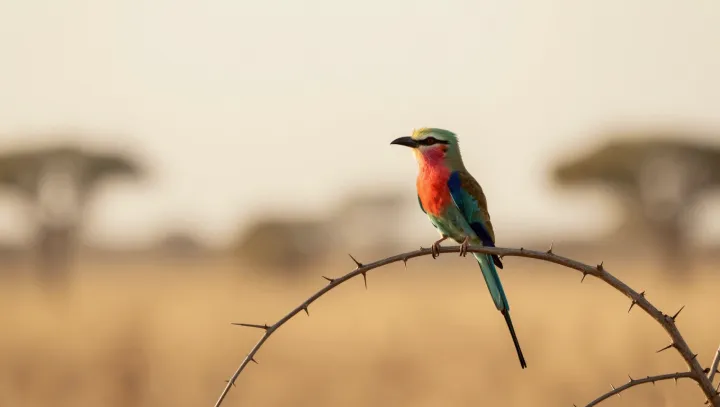
Gravity should win. Yet a line of sparrows can doze on a swaying branch and not a single body drops. Under each tiny foot, anatomy rather than willpower does the heavy lifting, as a tendon system snaps into place the moment the bird bends its legs.
This is not relaxation, it is engineering. When a perching bird lands and its ankle joint flexes, the flexor tendon locking mechanism tightens automatically around the branch, turning toes into passive clamps; as long as the legs stay bent, the grip holds, without continuous muscle contraction or conscious control, and only when the bird straightens its limbs does the system release.
Human style deep sleep would waste that advantage. Many birds instead run a split program called unihemispheric slow wave sleep, in which one cerebral hemisphere shows slow wave activity while the other maintains wake like neural firing, keeping one eye open, stabilizing posture and preserving rapid response to predators, a trade that favors vigilance over full restoration.
The result is a quiet compromise. Mechanical locking in the limbs handles gravity, asymmetric electroencephalogram patterns handle risk, and the bird, suspended between branch and sky, never has to choose between safety and sleep in the absolute way a human body must.