Chaos on the court is not noise; it is stimulus density at its peak. In a full 5‑on‑5 game, every possession forces rapid action selection while multiple players move, screens shift, and passing lanes open or vanish, a pattern that closely engages neural circuits for decision‑making and perceptual evaluation.
Neuroscientists argue that this street‑level scramble taxes the brain because it compresses time. Milliseconds matter. Prefrontal regions must run cost‑benefit computations while the basal ganglia handle action gating and inhibition, deciding shoot, pass, or drive under fierce time pressure, a workload similar to formal tasks that probe executive control and response inhibition in the lab.
The visual load is even less forgiving. A player tracks ball trajectory, teammate spacing, and opponent intent while updating a constantly shifting spatial map, which drives heavy activity in the visual cortex and dorsal attention network. Motion, depth, and peripheral cues all arrive at once, forcing continuous visual discrimination and rapid saccadic eye movements.
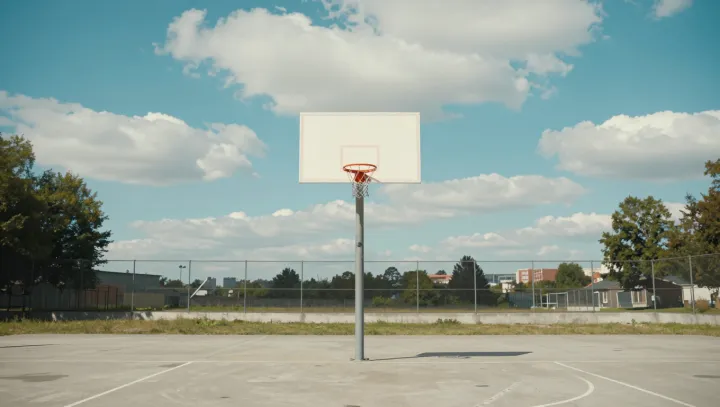
What brain‑training apps slice into tidy drills, a live game fuses into one stream. No pause. No reset. Each broken play demands real‑time prediction, error monitoring, and reinforcement learning as outcomes feed back into internal models of opponents and tactics, turning a cracked asphalt court into an unscripted cognitive laboratory.