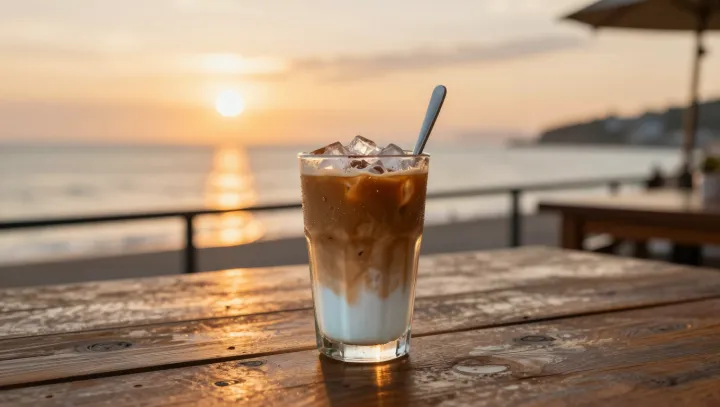
An iced beach latte feels like relief, yet pharmacists call it a heat trap in disguise. That first shock of cold on the stomach triggers splanchnic vasoconstriction, a redirection of blood from the skin toward the core, which briefly blunts heat loss from the body surface even as your tongue insists you are cooling down.
The bigger problem, they argue, is not temperature but recipe. High sugar means high osmolality; that dense solution can slow gastric emptying and delay water absorption in the small intestine, so plasma volume does not rebound as fast as you expect. With less effective volume expansion, cardiac output to the skin and eccrine sweat gland secretion both underperform, and evaporative cooling stalls while you sit under the sun believing the ice did the work.
By contrast, a plain, mineral-rich drink at room temperature looks boring yet behaves like a quiet technician for thermoregulation. Sodium and potassium support plasma osmolality at physiological levels, encourage better water retention without overshooting, and keep sweat composition closer to what the glands are designed to produce. Because the fluid is not extremely cold, gut vessels constrict less, blood flow to the skin recovers faster, and the body can trade heat to the environment rather than hoard it behind a chilled, sugary illusion.