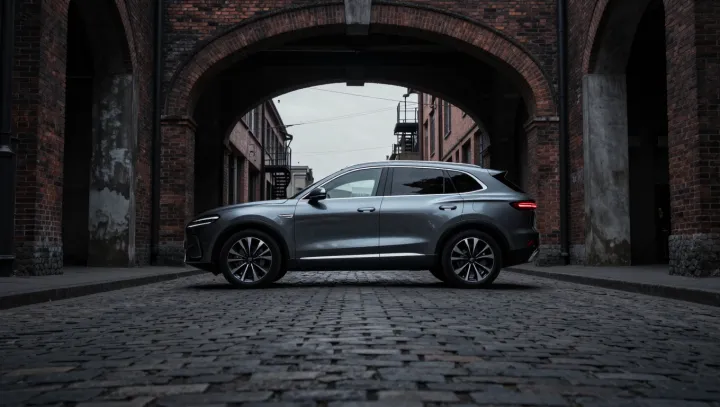
Cupra now functions less as a spin-off and more as Volkswagen Group’s quiet control room. Born as a budget-flavored offshoot of SEAT, the badge has been repurposed into a contained arena where new electric powertrains, battery chemistries and software-defined vehicle concepts can be stress-tested without jeopardizing core volume brands.
What looks like a style exercise is actually a risk firewall. By routing early versions of MEB-based architectures, advanced thermal management and over-the-air update stacks into Cupra models, the group gains real-world data on degradation curves, customer tolerance for aggressive torque mapping, and the commercial limits of subscription features. If a feature misfires, fallout stays inside a smaller fleet and a more experimental customer base, while successful hardware and human–machine interface ideas can then be scaled into Volkswagen and Audi with far higher confidence.
The brand’s attitude-heavy design and pricing strategy is not cosmetic; it is a segmentation tool. Cupra attracts buyers who accept bolder UX, brighter cabin screens and less conservative chassis tuning, giving engineers and marketers a live A/B test bed for battery pack sizing, charging behavior and digital upsell funnels. That quiet loop, running behind the headline nameplates, is how a once budget-friendly offshoot has become the group’s most valuable prototype running at full retail speed.