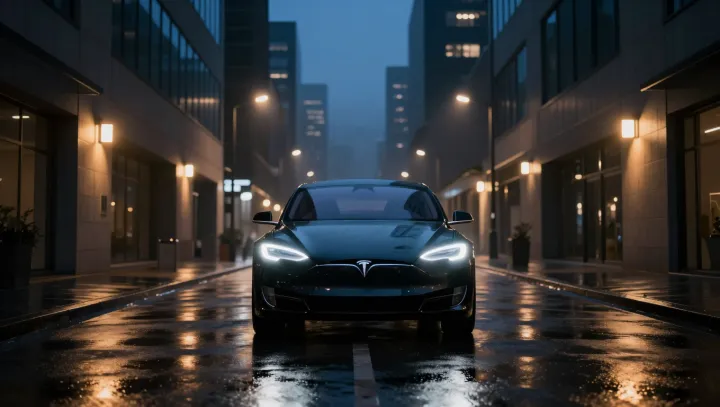
A parked sedan now rivals a small data center, yet a puddle can outsmart it. Under the hood, high‑end vehicles run multicore CPUs, GPUs and dedicated neural‑network accelerators once reserved for research labs, crunching teraflops of floating‑point operations every second on camera, radar and lidar feeds.
The real problem sits on the street, not in the chip. Wet asphalt scrambles computer vision by flattening contrast, corrupting edge detection and confusing convolutional neural networks trained mostly on clean, high‑visibility images, while reflections create phantom lanes and ghost pedestrians that break path‑planning algorithms mid‑block.
Urban driving also punishes any neat engineering assumption. Lane markings fade, ad‑hoc construction zones violate the digital map, and occlusions from trucks or umbrellas defeat sensor fusion that depends on probabilistic models such as Bayesian filters and occupancy grids, so the car hesitates or misroutes despite raw processing headroom.
What looks like stupidity is really fragility. These systems excel at interpolation inside a curated training set but still lack robust generalization under rare edge cases, where a single rain‑slick corner exposes the gap between benchmark performance and the stubborn chaos of real pavement.