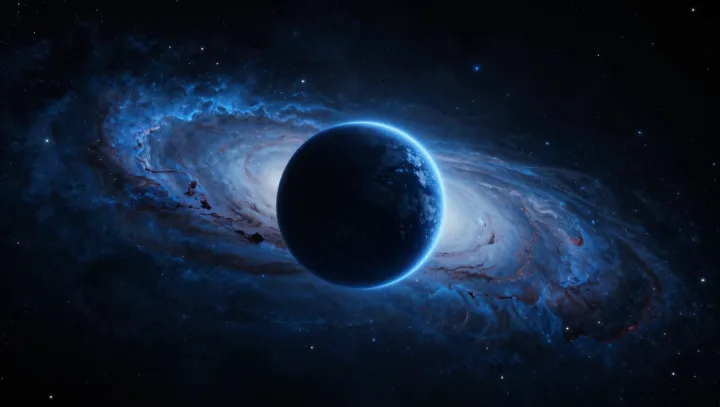
A quiet statistical trick, not a miracle, best explains Earth’s seeming exclusivity. Our blue planet sits in a narrow orbital band where liquid water can persist, but that so called habitable zone is only the entry ticket, not the prize. Plate tectonics recycle carbon dioxide, the geomagnetic field deflects stellar wind, and a relatively stable star supplies steady energy. Most surveyed planets either scorch, freeze, or lack this long, boring stability.
The sharper claim is this: life may be chemically easy, complex life brutally hard. Basic biochemistry follows ordinary thermodynamics and organic chemistry, yet multicellular organisms probably required rare leaps such as endosymbiosis and oxygenic photosynthesis. Astrophysicists fold this into the Great Filter idea, a series of low probability gates that most worlds fail. Exoplanet catalogs already show countless super Earths and hot Jupiters that likely stall at earlier steps.
The real twist is observational bias. Our instruments strongly favor massive, close orbiting planets; small temperate worlds like Earth sit below many detection thresholds. We see lifeless giants because those are the ones our transit photometry and radial velocity methods can register. Until telescopes can read atmospheric biosignatures like molecular oxygen or methane disequilibrium on Earth sized targets, the silence beyond our sky is less a verdict, more a measurement artifact.