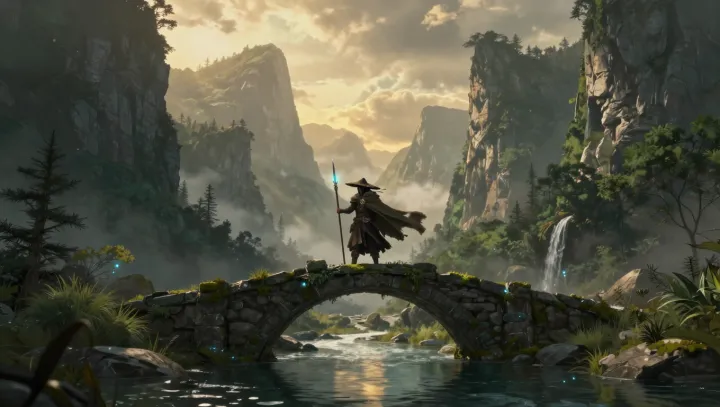
A cliffside warrior in total silence can hit the brain as hard as a kiss. No dialogue, no touch, yet the ventral striatum still lights, because reward is less about romance and more about prediction error and resolved tension. When the shot balances vast danger with apparent mastery, dopaminergic neurons flag that contrast as valuable information, not background noise.
The awkward truth is that awe is a performance enhancer for threat circuits. A tiny human against an endless drop stretches the visual field, recruits the posterior parietal cortex, and magnifies a sense of scale that the amygdala reads as potential danger, while the prefrontal cortex quietly runs risk appraisal and perceived agency. If the frame implies competence, not panic, the brain integrates hazard with control, converting raw fear into a reinforced internal model of “I could handle this, at least in story space.”
Kisses and cliffs share a hidden grammar of approach and risk. In both cases, heart rate, autonomic arousal, and hypothalamic regulation shift as the viewer tracks whether exposure will bring harm or bonding. A wordless warrior, framed on the edge yet standing firm, compresses that entire arc into one image, so the reward circuitry treats the moment like a successful gamble and pays out in dopamine.
What looks like minimalism on screen is, inside the skull, a full sensory audit of awe, threat detection, and hard-won control, all clearing the same neural checkout line as a love story’s kiss.