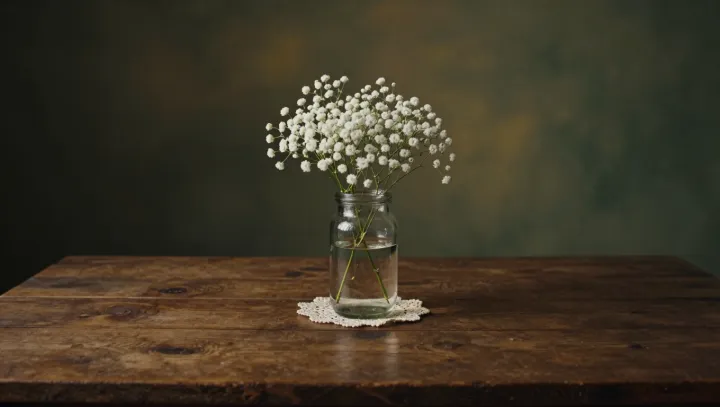
A quiet glass jar can outplay a ceiling lamp. On a bare table, a compact cluster of petals acts as a visual amplifier, changing what the eye reports without touching the dimmer. Vision scientists call it context: the same luminance feels stronger when framed by neutral surfaces, so the tiny saturated target makes the whole field seem brighter.
The bolder claim is that color itself appears to upgrade. Short cones and long cones in the retina feed into color opponency circuits, and those circuits compare, not just record. Place rich reds or intense yellows in a pale room and neural contrast enhancement boosts perceived saturation across nearby surfaces, a kind of local gain control that spills beyond the flower heads.
Most counterintuitive is the sense of space. A fist-sized vertical object on a flat plane introduces new depth cues: occlusion, figure–ground separation, even a faint suggestion of linear perspective along table edges. With more reference points to parse, the visual cortex recalibrates spatial mapping, stretching the room in perception though every watt of illuminance stays fixed.