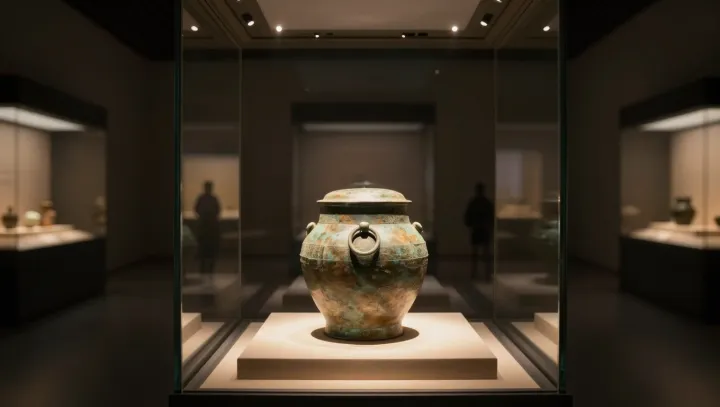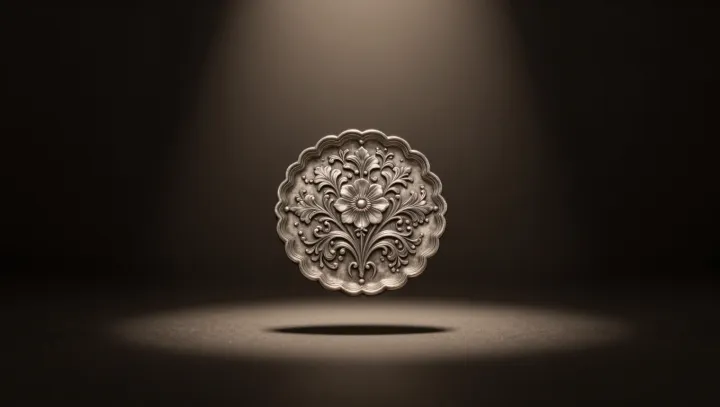
A rough casting has no right to look like fine jewelry. Yet under magnification, historic bronze or silver ornaments show edges as clean as machined parts, cut not by steel tools but by physics hidden inside the metal itself. In those workshops, the real sculptor was the crystal lattice, not the artisan’s intuition.
The key claim is stark: detail came from controlled damage. Each hammer blow drove plastic deformation along slip systems inside the grains, creating work hardening that turned a once-mushy surface into a shell of higher yield strength hugging a softer core. That gradient behaved like a natural die, so the next blows could push metal sideways along grain boundaries and dislocation walls instead of simply flattening it.
Equally radical is the idea that polishing did more than shine. Abrasives first erased casting skin and large dendrites, then selectively cut softer zones between hardened ridges, a process modern metallography would read as differential wear across microstructures. The result was self-amplifying contrast: raised lines of strain-hardened metal, recessed fields where material flowed more readily under burnishing stones, all refined without a single engraved groove.
Most surprising of all, precision did not demand measurement. Rhythmic hammering at specific supports set up localized strain fields, almost like a crude finite element solution run by hand. Where the backing stake curved tightly, stress concentrated; where it opened out, metal could relax. By cycling between peening, annealing, and abrasive cutting, makers iterated toward edges thinner than a millimeter yet stable against buckling, proof that the lattice’s own rules could be leveraged as a silent toolset.