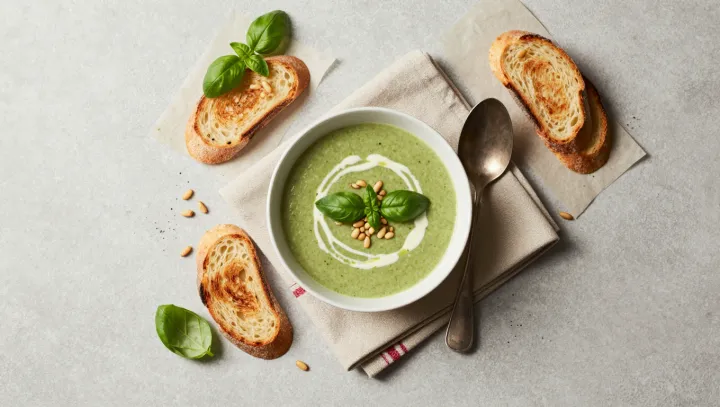
A thin basil broth should feel light; instead, it can hit like comfort food when its surface turns velvety and dense. Under that illusion sits basic sensory physiology: the tongue reads texture as a proxy for calories, and the brain updates appetite based less on ingredient lists than on what each sip feels like in the mouth.
Surprisingly, most of the work is mechanical, not metabolic. When water-rich vegetables are blended until their cell walls rupture, pectin and soluble fiber thicken the liquid phase, raising viscosity and creating the same slow-coating mouthfeel associated with starch gelatinization in pasta sauces. Add a controlled amount of fat dispersed as tiny droplets, and you trigger oral fat receptors and amplify creaminess without actually loading the bowl with cream.
The final persuasion comes from what sits on top, not in the base. Toasted pine nuts deliver concentrated lipid and Maillard browning notes, while crusty bread adds shear, chew, and a brief spike in glycemic response that aligns the experience with classic carbohydrate comfort. The vegetables still dominate the volume, but texture, emulsion structure, and high-impact garnishes quietly rewrite the story your appetite thinks it is hearing.