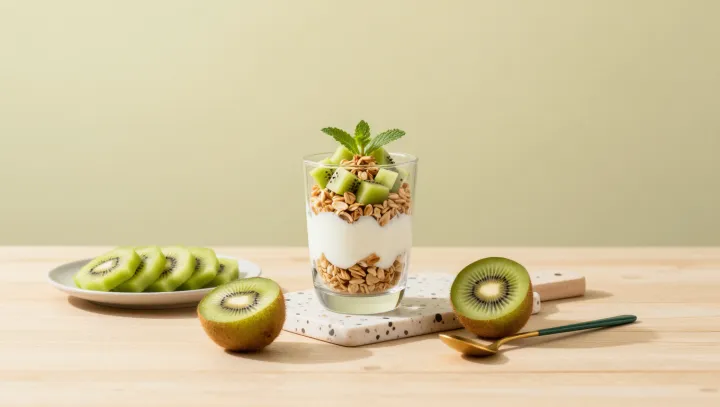
That pastel kiwi parfait on the café counter is less comfort food, more controlled experiment on your gastric lining. Against the soft-focus marketing, its chemistry and physics line up neatly against an empty, irritable stomach, especially when acidity and temperature hit at once.
Gut-friendly, it is not. Kiwi and other tart fruit bring a high load of citric and malic acid, lowering intragastric pH just as parietal cells are already primed to secrete hydrochloric acid after an overnight fast. On an empty lumen, where mucus and bicarbonate are relatively thin, that extra acid load can exaggerate nociceptor signaling and create the sharp, lemon-on-paper-cut sting many people describe as heartburn or cramping.
Gentle dairy, also not quite. Cold yogurt triggers transient gastric vasoconstriction, while lactose and milk proteins stimulate gastrin release, which further drives acid secretion at the level of the gastric parietal cell. Add to that a topping of hard granola: coarse oats, nuts, and seeds exert direct mechanical shear on already sensitized mucosa, especially in people with functional dyspepsia or low-grade gastritis, where epithelial tight junctions and prostaglandin-mediated protection are compromised.
The real twist is that the same parfait can feel harmless after a mixed meal. With buffer from starch, fat, and saliva, pH swings flatten, gastric emptying slows, and that trio of acid, cold, and crunch loses much of its bite, even as the marketing copy keeps selling the illusion of a universally soothing snack.