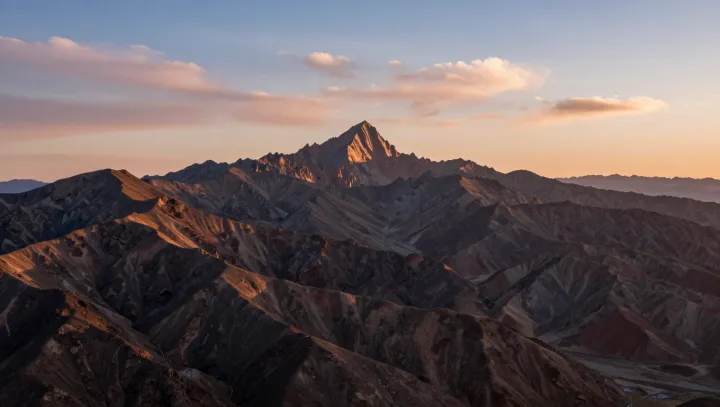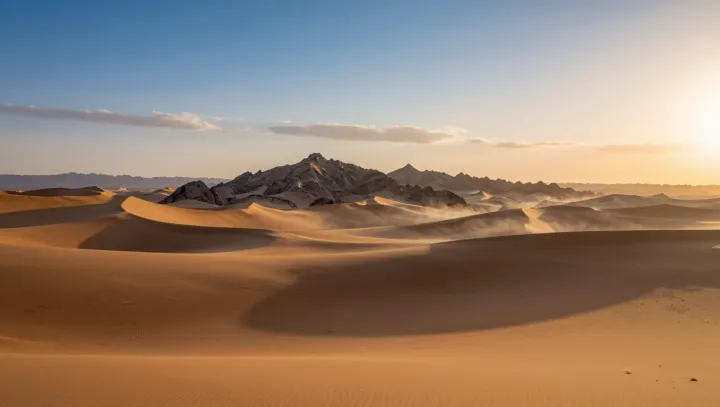
Those glowing ridges are not mystical at all; they are brutally literal physics. Thin desert air, packed with suspended dust, takes low-angle sunlight and kicks it forward toward the viewer, a process known as Mie scattering. The light path stretches through a long column of aerosol, so even modest dust density builds a bright, directional wash that seems to come from the rock itself.
The stranger part is that the rock helps. Many desert ranges are built from feldspar-rich granite, sandstone, or volcanic tuff with relatively high albedo and grains that act like tiny light pipes. Sunlight penetrates a short distance, bounces between mineral interfaces through subsurface scattering, then leaks back out softened and slightly warm in tone, so cliffs look internally backlit while shadows stay surprisingly luminous.
Human vision finishes the illusion. Our visual system, tuned by contrast adaptation and edge detection, treats a bright, hazy foreground edge against a darker sky as if a hidden lamp were lodged behind the ridge. Add a dust veil that erases hard contours through forward scattering and Rayleigh scattering in the clear air above, and the brain promotes a simple verdict: the mountain is glowing. The photons, stubbornly, are still just sunlight, dust, and rock obeying radiative transfer.