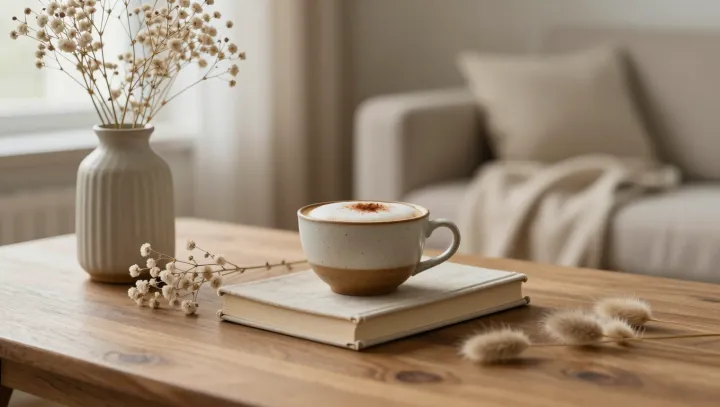
A warm ceramic rim against the lip does more to stress than many apps. That heat signal moves from skin receptors into the spinal cord, then into the insula and prefrontal cortex, regions that tag sensations as either threat or comfort, and repeated pairing of this warmth with a calm setting gradually shifts their prediction model toward safety.
Counter to the idea that stress is purely psychological, the slow sip itself acts like a manual override on the autonomic nervous system. Drawing in aroma and air before each mouthful extends exhalation, which stimulates the vagus nerve and nudges heart rate variability upward, a biomarker linked with lower cortisol and reduced amygdala reactivity in imaging studies.
Most striking is how tiny consistency, not intensity, rewires circuits. When the same gentle sequence returns day after day—hands around the mug, first inhaled scent, deliberate swallow—synaptic plasticity strengthens links between the hippocampus, which encodes the context, and prefrontal regions that inhibit alarm signals, so the brain learns that this ordinary corner, this chair, this clockwork ritual, predicts safety and a small rise in mood.