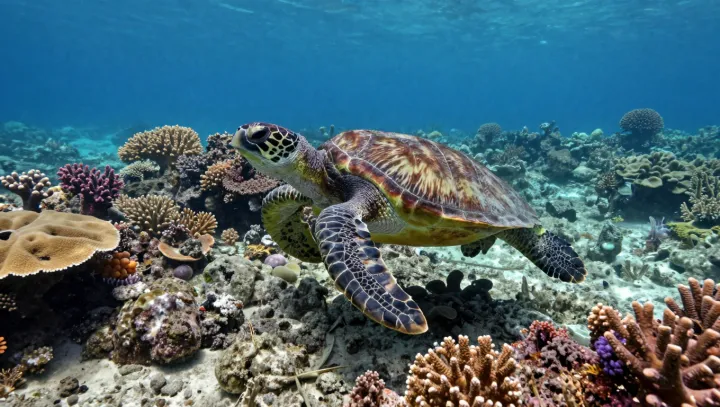
Stillness is the sea turtle’s boldest move. Over a coral reef, the reptile can hang in the water like a stone, yet its physiology is running a tight, disciplined script that keeps every breath of air working far longer than intuition suggests.
The key is not strength but restraint. With each dive, heart rate drops into bradycardia, so only a few beats push blood toward the brain and heart while peripheral tissues accept reduced flow. Oxygen is banked not in the lungs alone but in hemoglobin‑rich blood and myoglobin‑dense muscle, a dual reservoir that turns a single surface breath into a prolonged credit line the body carefully spends.
Laziness, in this case, is strategy. By staying almost motionless over the reef, the turtle slashes metabolic rate, trimming adenosine triphosphate demand in muscle fibers so less oxygen is burned per minute. Anaerobic glycolysis quietly covers any shortfall in less active tissues, tolerating temporary lactic acid buildup that will be cleared only after surfacing, when ventilation and circulation surge again.
Even the lungs are managed with caution. Air volume is moderated to limit nitrogen uptake and reduce buoyancy, helping the turtle rest with minimal fin strokes. What looks like effortless hovering is in fact a sequence of controlled compromises, all aimed at buying a few more underwater heartbeats before the next, unhurried trip to the surface.