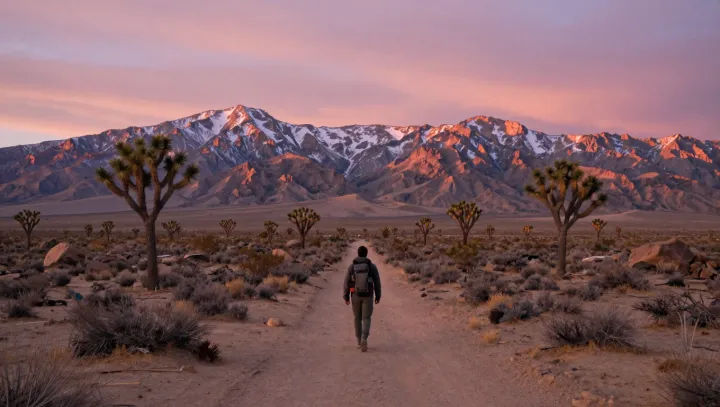
That harsh contrast behind the Joshua tree is not a contradiction; it is the secret of its niche. Under air that can burn exposed skin, the tree keeps its tissues buffered by hoarding water in a spongy stem and thickened roots, while its narrow, dagger leaves cut the sun to a minimum and expose very little surface for evaporation.
More surprising is how calmly the same organism faces freezing air pouring off those snow-capped mountains. Instead of chasing rapid growth, Joshua trees run a conservative metabolic strategy, slowing photosynthesis when temperatures swing too far and relying on stored carbohydrates to bridge the gap, a kind of built-in insurance policy against thermal whiplash that would rupture cells in many broadleaf plants.
Equally defiant is the timing. Flowers and new growth tend to appear when desert nights are cool but not lethal, a schedule wired to cues in photoperiod and soil moisture rather than the day’s brutal peak. Beneath the gravel, extensive shallow roots vacuum brief pulses of rain before they vanish, locking that water into fibrous tissues that behave more like a reservoir than a trunk.