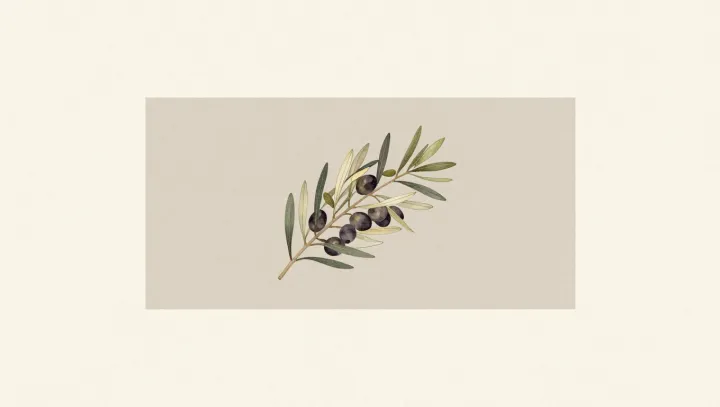
An olive branch no longer just negotiates peace; it now negotiates attention. Stripped of veins, shadows, and botanical clutter, the branch appears as flat ovals and a single pale line, a design move that quietly mirrors what happens in the visual cortex when input shifts from intricate foliage to simplified forms.
The surprising claim is that this visual downgrade is a neurological upgrade. Detailed natural scenes bombard the retina, driving high firing rates in primary visual cortex and feeding the amygdala with rich material for threat detection. Reduce that scene to a few desaturated shapes and the neural load drops; fewer edges and lower spatial frequency mean less metabolic demand and a softer autonomic response in heart rate and skin conductance.
Designers would say the symbol has been optimized; neuroscientists might say it has been downregulated. By muting color and compressing information, contemporary icons of the olive branch exploit principles of sensory gating and predictive coding, giving the brain an easy pattern to confirm instead of a puzzle to solve. What once promised political ceasefire now stages a quieter truce, between stimulus and the nervous system that must process it.