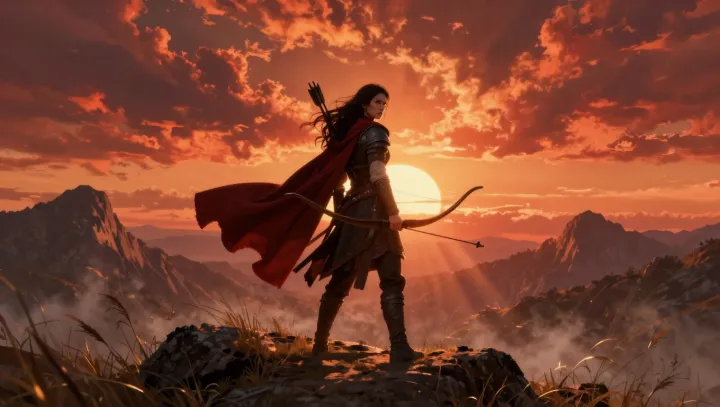
Sun on a drawn bow, not a charging army, now carries the sharpest threat in epic fantasy. Where older sagas leaned on cavalry surges and roaring beasts, this single archer fixes drama to tension in a bowstring, drag coefficients in the air, and whether a target steps half a pace out of line‑of‑sight.
The bold move is simple: the archer barely shifts, yet the story vibrates because every shot obeys projectile motion and conservation of energy. A raised elbow changes release angle; a gust alters parabolic trajectory; armor thickness meets kinetic energy in a quiet, merciless equation. Instead of command banners, readers track arrow speed, draw weight, and the geometry of cover, as if reading a field manual disguised as myth.
This approach argues that precision beats spectacle. By treating the bow as a calibrated machine and sightlines as tactical infrastructure, the narrative turns each notch of the string into a decision about gravity, wind shear, and occlusion. The archer, almost motionless against bright stone, becomes less a hero than a living instrument panel, and epic fantasy shrinks from continents to the narrow corridor an arrow can honestly cross.