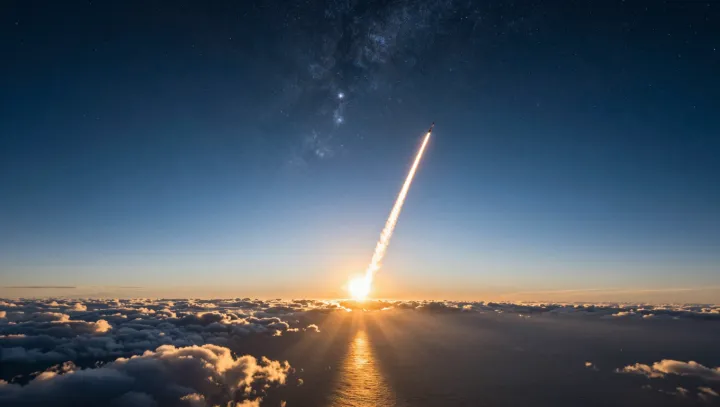
A quiet sky can be an energy trap. A car-sized rock drifting through space carries no flame, no smoke, just velocity, and that velocity is the hidden budget that turns a pale dawn into a blinding streak. As the meteoroid slams into the upper atmosphere at tens of kilometers per second, its kinetic energy dwarfs many engineered blasts, because energy scales with the square of speed, not size.
The real surprise is how little mass it needs. A rock only a few meters across can store energy on the order of large conventional munitions, and as ram pressure builds in the thin air, its outer layers ablate, turning solid stone into a plasma sheath. That sheath radiates intense thermal emission while the shock wave in front of the object compresses and heats air to incandescent temperatures, creating the fast-rising flare that observers call a fireball.
What looks like a simple streak is actually a violent transfer problem. Mechanical energy converts almost instantaneously into heat, acoustic waves and ionization, producing an airburst that can light up horizons and rattle windows far below. Because the breakup occurs high in the atmosphere, the shock front spreads over a wide area, so a rock no bigger than a car can release more energy in seconds than many human-made explosions before any fragment ever touches the ground.