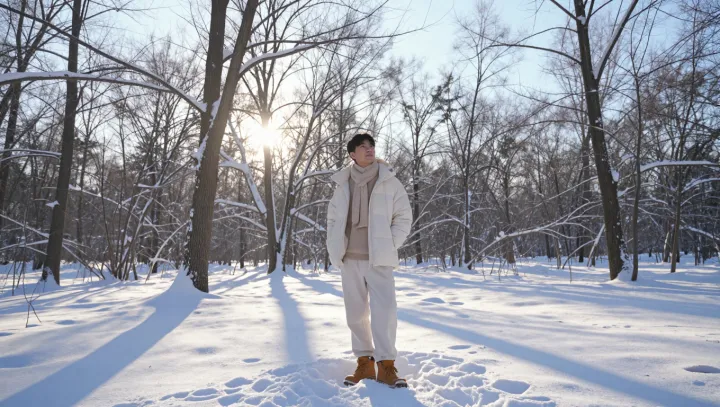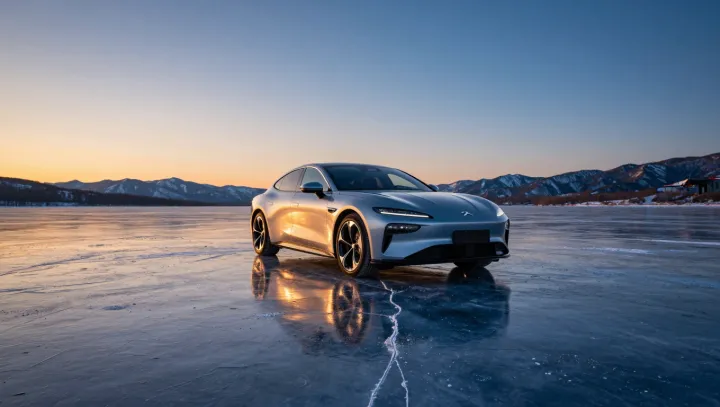
Sunrise light across a frozen lake makes one fact obvious to physics and deeply counterintuitive to instinct: the still car is safer than the walking person. Under that quiet surface, ice behaves less like fragile glass and more like a slow, imperfect structural material that rewards broad, steady loads and punishes sharp, concentrated hits.
The real problem is not total weight but pressure. A car spreads its weight through four wide tires, each further diffused by the ice flexing as a plate, so the contact area grows and local stress drops. A human heel or toe slams force into a tiny patch, driving up pressure, and a jumping step spikes it even higher in a split second. Ice under high local stress develops tensile cracks, which then propagate when the stress intensity factor at a flaw exceeds the material’s fracture toughness.
Equally underrated is time. A parked car loads the ice gently, letting microcracks creep and redistribute stress. A walking person delivers dynamic impact, creating short, sharp stress waves that the ice cannot re-balance fast enough. Temperature gradients add another twist: at sunrise, the upper layer can be slightly warmer and weaker, so a sudden footfall near a thin spot or air bubble can trigger brittle failure while the same sheet still carries a car that settled there slowly hours earlier.