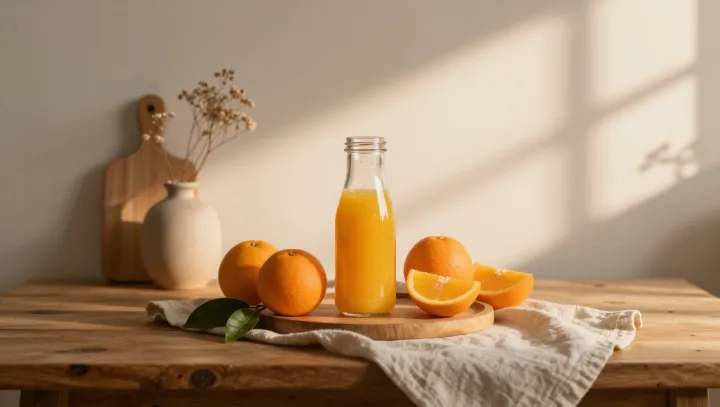
Fresh orange juice looks like a vitamin jackpot, yet its main edge is sensory, not biochemical. The juice squeezed at home often carries slightly more vitamin C and folate than carton juice, because less oxidation and less heat treatment have occurred during extraction and storage in the kitchen.
The real gap, though, is smaller than marketing implies. Pasteurized carton juice still retains substantial ascorbic acid, sometimes with added vitamin C to match label claims, and both products hit the ceiling of what intestinal transporters can absorb in a single serving. Once those transport proteins saturate, extra milligrams bring diminishing biological return.
Where fresh juice clearly pulls ahead is aroma chemistry. Volatile compounds such as limonene and aldehydes remain more intact when juice moves straight from fruit to glass, while carton juice loses some of these molecules through processing, storage and repeated temperature shifts. That difference registers on the tongue and nose more than in the bloodstream.