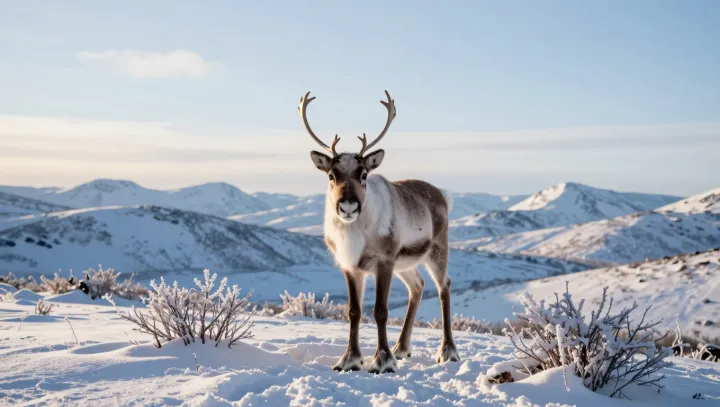
Antlers settle the meal. Across wind-packed snow, a reindeer that keeps its crown can push rivals from feeding craters, where hooves have broken the crust and exposed lichens, sedges, or buried forage. Hunger changes the hierarchy. What looks like breeding equipment becomes a winter tool of intrasexual competition, especially when ice seals the ground and each opened patch offers a small return.
That advantage is uneven. In many reindeer populations, adult males commonly shed antlers after the breeding season, while females, particularly pregnant females, retain theirs through winter and into spring, placing a visible barrier between themselves and competitors at a feeding pit. Biology picks a side. This pattern reflects antler phenology and sexual dimorphism, but its practical effect is blunt: an animal with antlers can threaten, shove, and hold ground without spending the energy of a prolonged chase. For pregnant females, that margin can support feeding while gestation continues.
The contest is economical. Beneath snow, forage availability is shaped by snowpack density, ice layers, and the cost of cratering, the hoof-driven excavation that exposes food; access, rather than abundance alone, decides who eats first. No antler is ornamental. A reindeer must locate a usable site, break the crust, and defend the opening from animals ready to take it. At a scraped hollow, the branch-like rack turns a quiet meal into a claim, and the herd's winter order is written in snow.