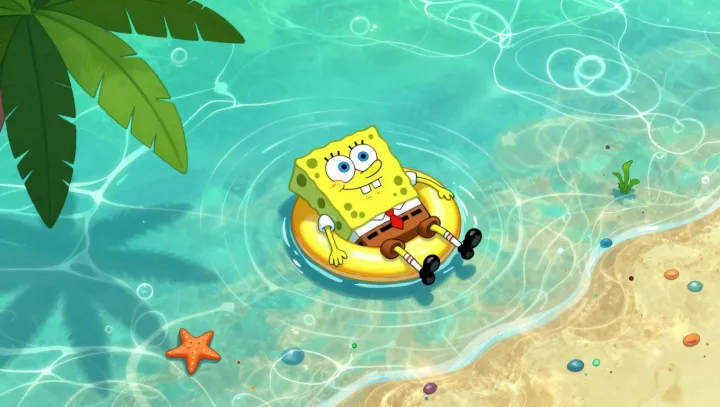
Under a kitchen tap, the yellow block performs a convincing disguise: pores take in water, release it, and invite the lazy comparison. That resemblance is skin-deep. SpongeBob borrows the silhouette, not the biology, because a sea sponge is neither scrubber nor seaweed but an animal built from living cells. The joke works because the body plan advertises its plumbing.
The cartoon gets one thing unusually right: the holes matter. In sponges, the aquiferous system draws water through ostia into canals and chambers, where choanocytes beat flagella and sustain the current. Tiny cells, large effect. Filter feeding captures bacteria and organic particles, while oxygen diffuses across cells and spent water leaves through an osculum. This is not passive straining. Cellular pumping turns a perforated body into a feeding system, far removed from foam.
Calling them plants is the older mistake, and calling them tools is the newer one. No brain directs the work. Their cells differentiate, coordinate, and can reassemble after damage, even though sponges lack the true tissues and organs found in most animals. Many species anchor to rock or reef and remain fixed in place, which helps explain the botanical confusion. Biology is less tidy than branding. Beneath the familiar outline, a porous body keeps making its case, one moving current at a time.