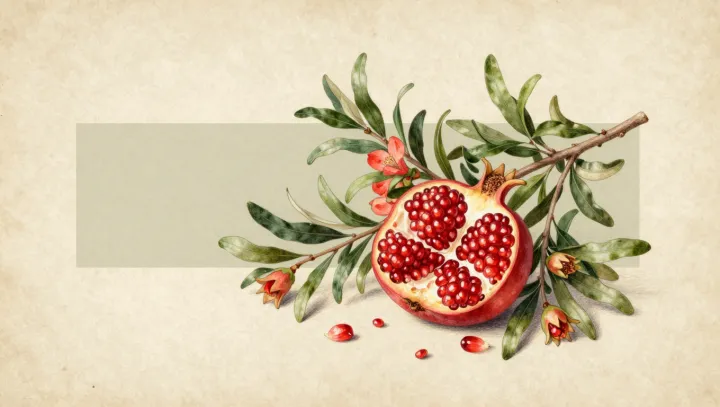
The red globe makes a liar of ordinary fruit names: beneath its hard rind, each bright aril appears to be a separate seed, although it is flesh enclosing one. Appearances mislead here. Classification follows construction, because botanists sort fruits by the ovary that produced them rather than by the spectacle of what they contain.
That rule feels perverse. Botanists classify the pomegranate as a specialized berry, often called a balausta, because the whole fruit forms from one flower's single multicarpellate ovary rather than from a cluster of separate ovaries. That is the test. The rind and internal partitions are pericarp, the mature ovary wall, and they contain many seeds rather than becoming separate fruits. Credit the ovary. Each juicy unit, commonly called an aril, is more precisely a fleshy seed coat, or sarcotesta, derived from integumentary tissue; the true seed is the firmer kernel nested inside.
The surprise lies there. A raspberry, despite its familiar berry label, is an aggregate fruit because separate ovaries produce its many drupelets; pomegranate anatomy runs in the opposite direction. Common names lose here. That distinction is more than classroom pedantry: botanical names track developmental origin, a record written before color, sweetness, and texture tempt the eye into a wrong verdict. The visual trick remains potent. At a cut surface, the fruit makes its quiet case: one ovary at the edge, a crowded cache of gleaming seed coats within.