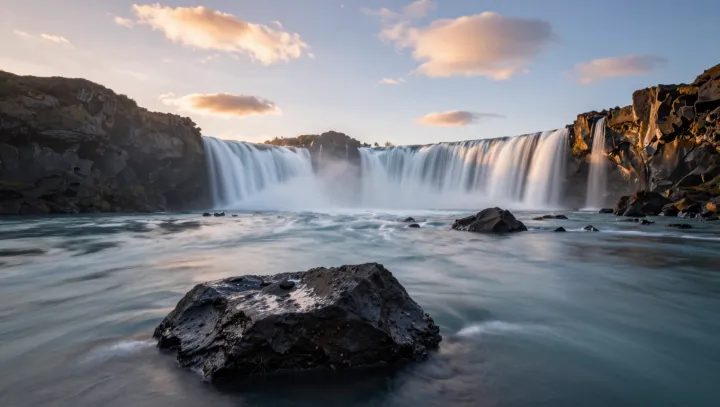
A low, unbroken horizon makes a persuasive claim: less is often more. It edits the signal. Where a city throws traffic, signage, voices, and competing routes at the nervous system, an island commonly offers a finite field of view, whose visual limits reduce the small acts of scanning that keep directed attention on duty. Its limits are visible, and visibility matters. The sea does not ask for triage.
That modest constraint may be the real luxury. Attention restoration theory distinguishes effortful directed attention from softer, involuntary attention; the latter can hold the mind without exhausting it. A shore, a tide line, a single path: these are not empty inputs, but legible ones. Lower sensory clutter can also ease cognitive load, leaving fewer cues to sort, suppress, or monitor for threat. Calm is not guaranteed. Storms, crowds, and isolation can reverse the effect. Yet a bounded setting often makes the brain's filtering work cheaper.
Still, the island's remedy is not silence alone. It is proportion. With the horizon held in place and the noise stripped back, thought can loosen its grip, like a boat no longer fighting every current.